

A real-world VoIP platform comparison from a hotel operator who waited too long to change
“I should have known about this VoIP platform before choosing FreePBX PBX—it would have saved us from losing hundreds of calls during peak season.”
My name is David Miller, and I am the Operations Director of Harbor View Hotel, a 140-room hotel located in downtown San Diego. We serve a mix of leisure travelers, corporate guests, and long-stay customers.
In the hospitality industry, communication systems are not background infrastructure. The phone system sits directly on the revenue line. Reservations, late arrivals, room service requests, corporate bookings, and emergency support all depend on it. When the phone system fails, revenue loss is immediate—and visible.
Two years ago, when we decided to modernize our PBX, we chose FreePBX PBX. At the time, it felt like a responsible and even forward-thinking decision.
Why FreePBX PBX Looked Like the Right Choice at the Time
Like many mid-sized businesses, our decision was driven by budget constraints and flexibility concerns. FreePBX software checked many boxes:
- It is open-source, with no per-user or per-extension licensing
- It offers deep customization of call flows and dial plans
- It provides full control over infrastructure and data
- It has a large global community and extensive documentation
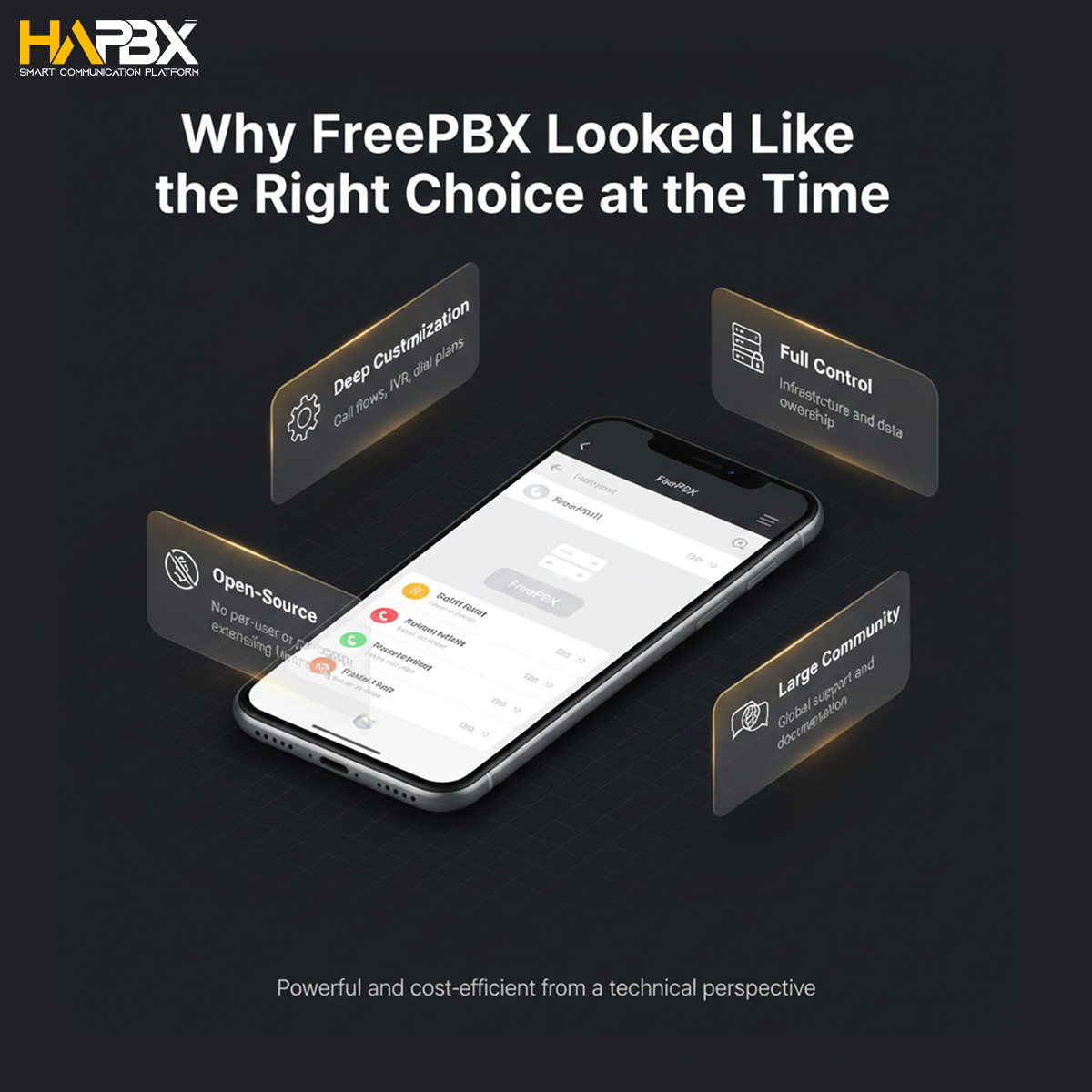
From a purely technical perspective, freepbx pbx appeared powerful and cost-efficient. For a hotel that wanted to avoid long-term vendor lock-in, the appeal was obvious.
In the early months, the system worked well enough. Front desk staff handled incoming calls, internal extensions were stable, and basic queues did their job. For a while, we believed we had made the right call.
When FreePBX PBX Became a Business Risk Instead of a Cost Saver
The problem wasn’t that FreePBX failed immediately. The problem was that it stopped scaling with the business.
As occupancy increased and call volumes grew, the operational reality of running a self-managed PBX became harder to ignore. Our hotel did not have a dedicated VoIP engineering team. Our IT department consisted of a small group responsible for:
- Property Management System (PMS) integrations
- Network and Wi-Fi reliability
- Security cameras and access control
- Guest-facing digital services
Maintaining freepbx software at a production, business-critical level required a depth of Asterisk and Linux expertise we simply didn’t have.
The operational consequences became measurable within the first year
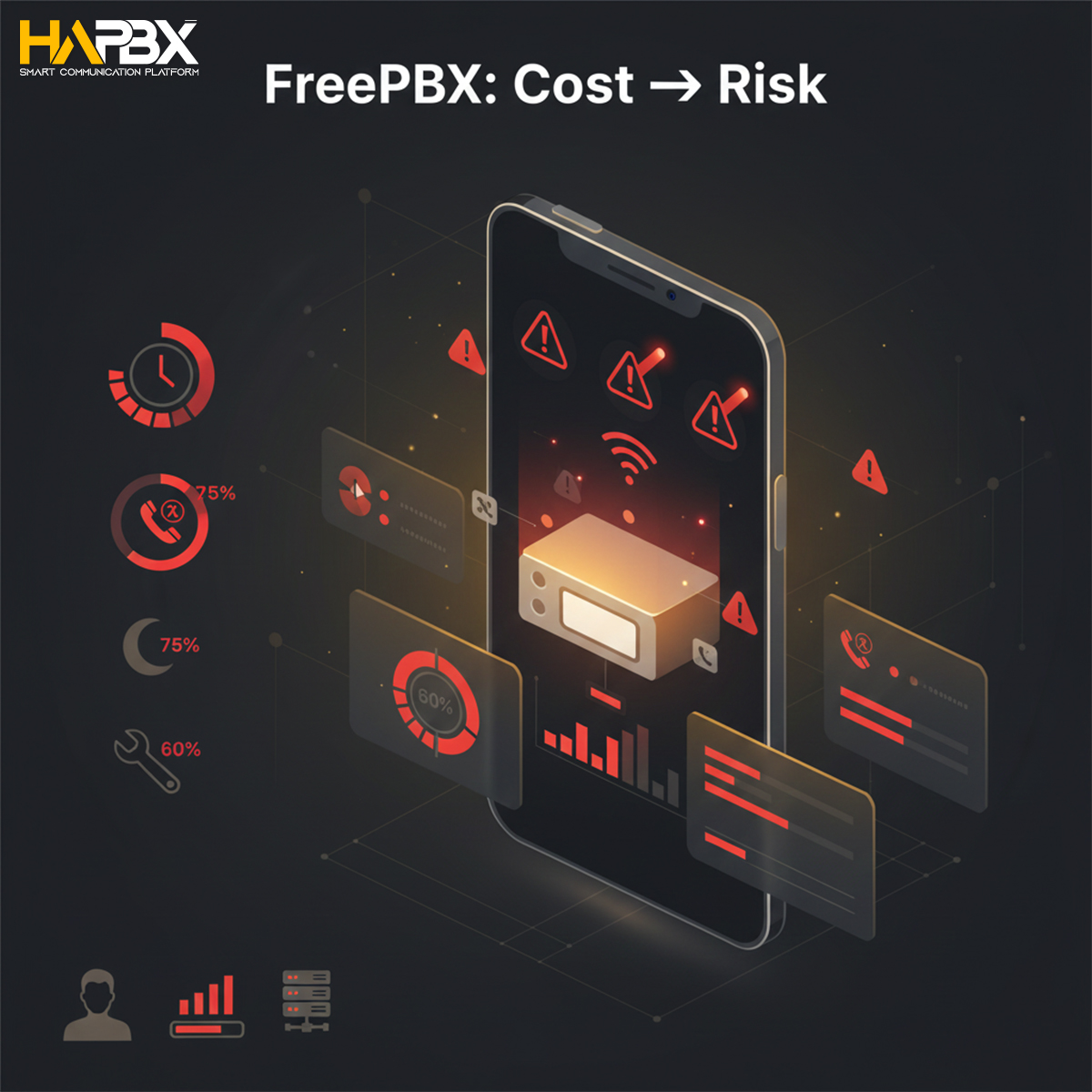
📉 10–15 hours of PBX downtime annually, often during high-traffic check-in windows
☎️ 15–20% of inbound calls dropped or went unanswered during peak periods
🔄 IVR changes and updates required late-night maintenance to avoid disruptions
🔧 Each major incident required 3–5 hours of troubleshooting and recovery
💸 Rising hidden costs:
- External Asterisk consultants
- Paid add-on modules for reporting and queues
- Hardware upgrades to survive seasonal call spikes
From an accounting perspective, FreePBX no longer looked “free.”
From an operational perspective, it was becoming a single point of failure.
The Real Cost of FreePBX PBX Wasn’t Technical
The biggest issue wasn’t server crashes or configuration errors. It was customer experience.
We started seeing negative guest feedback:
- “We tried calling several times with no answer.”
- “The front desk didn’t pick up late at night.”
- “For a hotel at this level, phone support should be reliable.”
In hospitality, perception matters. A missed call isn’t just a lost opportunity—it’s a damaged impression. Every unanswered call during peak season represented potential lost revenue and long-term brand erosion.
At that point, freepbx pbx was no longer an IT tool. It was a business liability.
The IT Conversation That Changed Everything
After a particularly painful incident—a 30-minute PBX outage during peak check-in—I sat down with our IT manager and asked a direct question:
“Are we still using the right platform for where this hotel is today?”
His answer was refreshingly honest:
“FreePBX software isn’t bad. But it assumes you have strong in-house VoIP expertise.
At our scale, we’re taking risks that don’t align with the business anymore.”
That was the first time he mentioned HAPBX.
Not as a replacement feature-for-feature, but as a fundamentally different operational model.

Understanding the Difference: HAPBX vs FreePBX
What immediately stood out in this HAPBX vs FreePBX discussion was philosophy.
FreePBX focuses on flexibility and self-management.
HAPBX focuses on stability, predictability, and availability by design.
This wasn’t just a software comparison—it was a VoIP platform comparison between two very different approaches to risk.
Why HAPBX Solved Problems FreePBX PBX Couldn’t
From an operational standpoint, HAPBX addressed every major pain point we had encountered with FreePBX:
Key architectural differences
- Dedicated Instance deployment
Each customer runs on isolated resources—no shared servers, no noisy neighbors.
- Native High Availability
Active/Active or Active/Passive clustering is built in, not bolted on.
- Geo-aware cluster design
No dependence on a single server or location.
- Predictable performance
Latency consistently around 50ms, rarely exceeding 150ms.
- Enterprise-scale concurrency
Designed to support 100–200+ concurrent calls without manual upgrades.
Unlike FreePBX PBX, HAPBX did not require us to design, test, and maintain failover logic ourselves. That responsibility shifted away from our internal team.
FreePBX PBX vs HAPBX: A Practical VoIP Platform Comparison
| Category | FreePBX | HAPBX |
| Deployment | Self-hosted | Managed Cloud |
| Architecture | Single server (default) | Dedicated Instance |
| High availability | Manual, complex | Native |
| Downtime risk | Moderate to high | Minimal |
| Peak-season scaling | Hardware-dependent | Built-in |
| IT operational burden | High | Low |
| Cost predictability | Variable | Stable |
This VoIP platform comparison made one thing clear:
FreePBX optimizes for control, while HAPBX optimizes for business continuity.
What Changed After We Migrated Away from FreePBX PBX
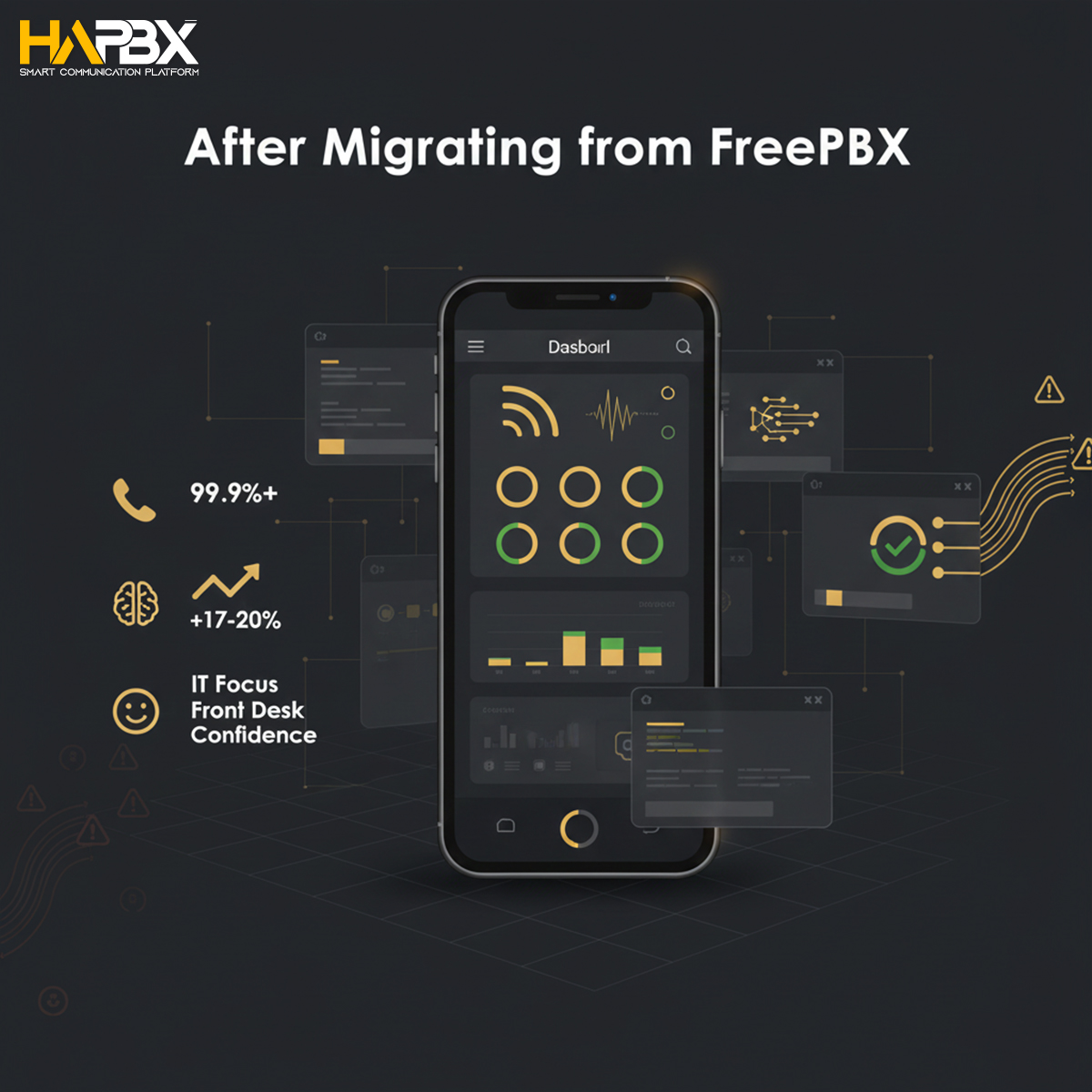
Six months after moving to HAPBX, the difference was obvious:
📞 Call success rate consistently above 99.9%
📈 17–20% increase in phone-based reservations year over year
🧠 IT team shifted focus back to core systems instead of PBX firefighting
😌 Front desk staff gained confidence that calls would always reach someone
Most importantly, the phone system stopped being a daily concern.
What This Experience Taught Me About FreePBX Software
FreePBX software is not inherently flawed. In the right context, it can be a powerful solution. But context matters.
FreePBX PBX works best when:
- Downtime is acceptable
- Strong Asterisk/Linux expertise exists in-house
- PBX is not a mission-critical revenue system
For businesses where communication uptime directly impacts revenue—hotels, call centers, customer-facing enterprises—the margin for error is far smaller.
Final Conclusion: Why HAPBX Ultimately Fit the Reality of Modern Business Operations
Looking back, the decision to move beyond FreePBX PBX was not driven by trends or features. It was driven by a much more practical realization: our business needed a communication platform designed for how modern enterprises actually operate, not one that depends on internal technical heroics to stay stable.
What ultimately convinced us was how clearly HAPBX is positioned as a Cloud PBX platform built for enterprises, with a focus on three operational requirements that matter far more than technical flexibility once a business starts to scale.
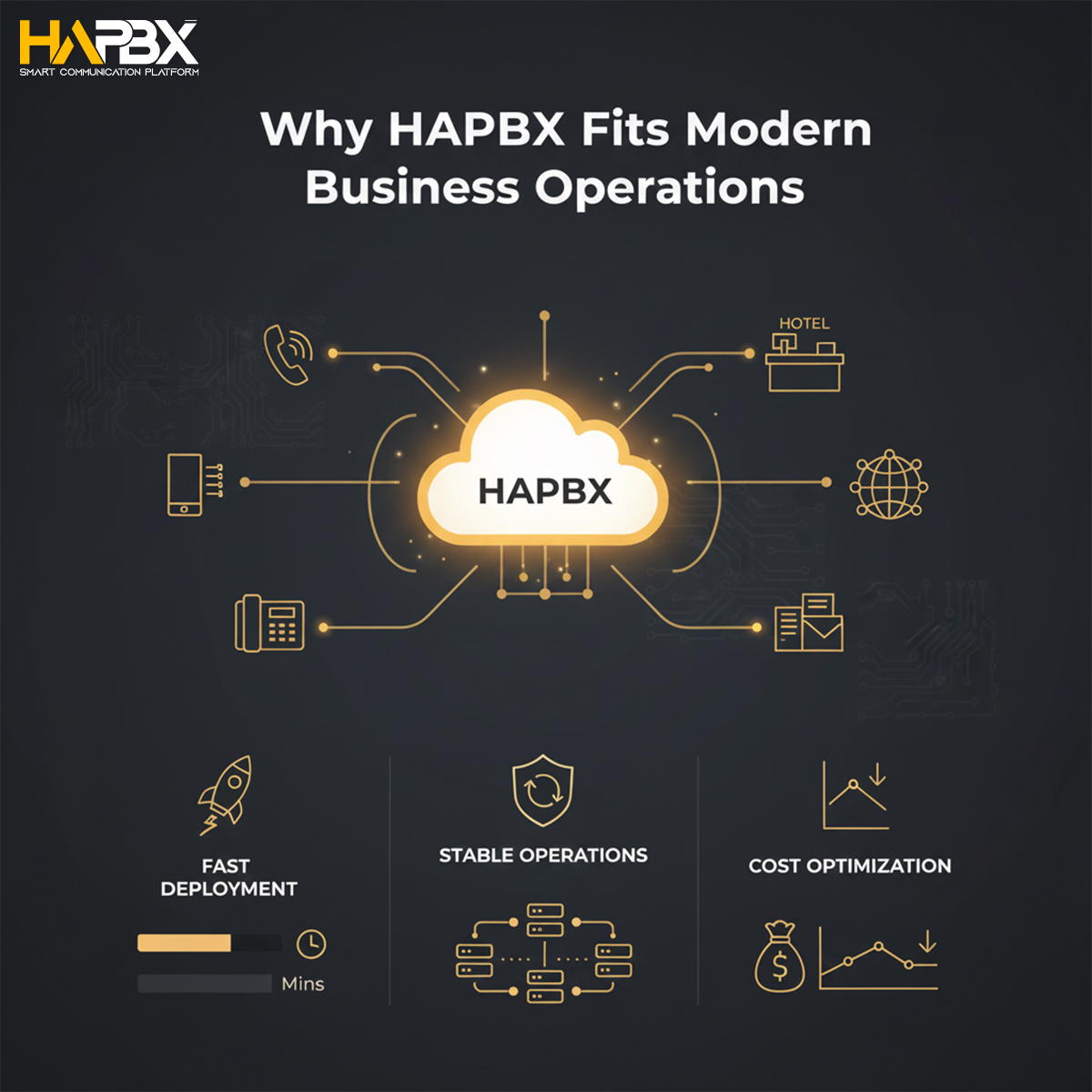
Fast Deployment – From Decision to Production in Minutes
Unlike traditional PBX deployments or self-managed platforms like freepbx software, HAPBX does not require hardware investment, complex server provisioning, or long configuration cycles.
For us, the ability to have a fully functional PBX environment ready within minutes—without building infrastructure or designing custom failover logic—meant faster time to value and significantly lower implementation risk. In a hotel environment, where downtime directly affects guests and revenue, speed of deployment matters.
Stable Operations – Built-In Resilience, Not Optional Add-Ons
HAPBX runs on a GEO-distributed, clustered infrastructure with automatic failover, ensuring the system remains available even during server or regional incidents.
This architectural approach removed our dependence on single servers and eliminated the operational fragility we experienced with FreePBX PBX. Instead of reacting to failures, we moved to a platform designed to assume failures will happen—and continue operating anyway.
For a business where communication uptime is mission-critical, this level of stability is not a luxury. It is a baseline requirement.
Long-Term Cost Optimization – Predictable and Sustainable
Perhaps most importantly, HAPBX changed how we think about cost. While FreePBX is often perceived as low-cost upfront, the long-term reality included hidden expenses: infrastructure upgrades, paid modules, external consultants, and internal operational overhead.
HAPBX’s dedicated cloud model delivered predictable performance without unpredictable costs. By consolidating infrastructure, maintenance, and availability into a managed platform, we reduced total cost of ownership compared to both traditional PBX systems and commonly deployed PBX solutions on the market.
From PBX as a Tool to PBX as a Business Platform
In the end, this was not just a HAPBX vs FreePBX decision. It was a shift in mindset.
We stopped treating the PBX as a technical experiment and started treating it as critical business infrastructure. HAPBX aligned with that shift by offering what growing enterprises truly need: fast deployment, stable operations, and long-term cost efficiency.
For our hotel, moving to HAPBX wasn’t simply a technology upgrade—it was a strategic step toward operational maturity. And in a business where every call matters, that change made all the difference.