

PBX call accounting systems have become essential tools for modern businesses seeking to optimize telecommunication costs, enhance security, and maintain regulatory compliance. From tracking call patterns and detecting fraud to allocating expenses across departments, these systems provide the visibility and control organizations need to manage their communication infrastructure effectively. However, the accuracy and reliability of any call accounting solution depends fundamentally on the stability of the underlying PBX platform – which is where solutions like HaPBX make a critical difference in ensuring complete, uninterrupted data capture.
What is Call Accounting?
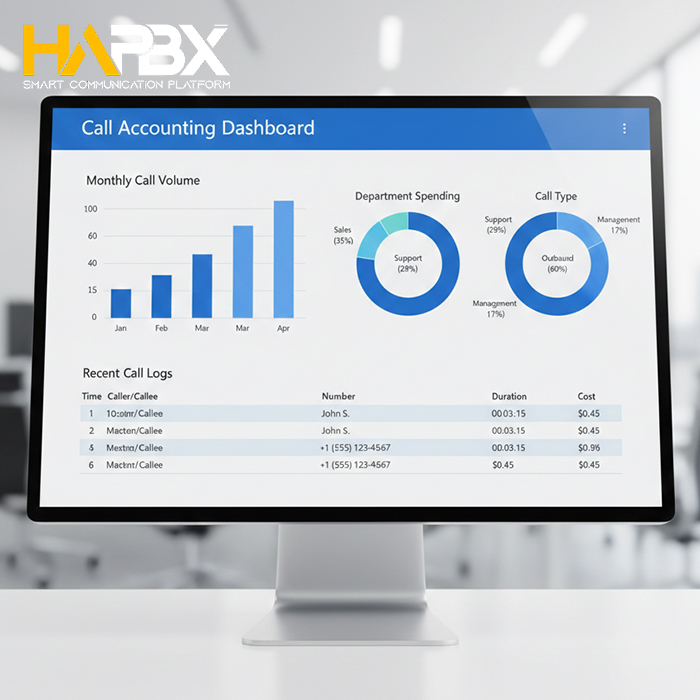
Call accounting, also known as call logging, call analytics, or call reporting, is a telecommunications system that captures, records, and analyzes telephone usage within an organization. At its core, this system stores detailed information about phone calls from PBX systems for later analysis by personnel or automated software.
A PBX call accounting system tracks a comprehensive range of call activities, including outbound and inbound calls, call duration, ring outs, call routing patterns, and abandoned calls. It collects critical data points such as call costs, time of day, caller identification, and the specific departments or individuals making the calls. This information is then organized into detailed call records that provide valuable insights into telecommunication patterns and usage.
By implementing call accounting software, businesses gain the ability to effectively monitor and manage their telecommunication expenses while obtaining actionable data about how their phone systems are being utilized across the organization.
How Call Accounting Can Help Organizations?
PBX Call accounting systems deliver substantial benefits that directly impact an organization’s bottom line – either increasing revenue or significantly reducing operational costs. By analyzing telecommunication patterns, businesses gain actionable insights to optimize their communication infrastructure and spending.
Cost Management and Optimization: Track every call made within the system to identify unnecessary expenses such as prolonged calls, high-cost destinations, or unused telephone lines. This visibility enables IT managers to implement targeted policies that control spending and eliminate wasteful telecommunication budgets.
Fraud Detection and Prevention: Continuously analyze call patterns to detect suspicious activities and toll fraud by unauthorized third parties accessing your PBX. Real-time monitoring allows immediate corrective action, protecting organizations from potentially significant financial losses.
Resource Allocation and Infrastructure Planning: Understand call volumes and usage trends to allocate resources strategically. Determine if you have too few lines to handle customer calls or if resources are underutilized, ensuring departments with high call volumes receive adequate capacity for seamless communication.
Customer Service Enhancement: Identify missed customer calls outside business hours, improve answer times and response rates, and reduce unnecessary call transfers. These insights directly boost customer satisfaction and retention while optimizing service delivery.
Billing and Chargeback Capabilities: Accurately allocate telecommunication costs to specific departments, branches, cost centers, or customers based on actual usage. This granular cost allocation promotes financial accountability and encourages responsible call usage across the organization.
Productivity and Performance Management: Discover employees making expensive long-distance, international, or premium service calls, and identify productivity losses from excessive personal calls. Gain comprehensive understanding of communication patterns to align telecommunication resources with business goals.
Compliance and Legal Protection: Maintain detailed call logs and comprehensive reports to support legal and regulatory requirements. These records prove invaluable during audits, protect employees by reporting malicious calls, and ensure all communication activities are properly documented and compliant with industry standards.
Basic types of PBX call accounting software
All call accounting software fundamentally works by connecting to your PBX system to capture and record call records (SMDR data) as they occur. However, performing detailed analysis and correctly handling the various SMDR formats from different PBX manufacturers requires specialized call accounting applications. The key difference between systems lies in how they operate and where the data is processed.
Desktop Applications: The simplest call accounting programs run directly on your computer and only operate when you are actively logged in. If someone else logs into the computer or you log out, the software stops receiving call records, which means potential data loss during downtime.
Background Service Applications: More advanced software runs as a background service that doesn’t require anyone to be logged in. As long as the computer is powered on, the software continuously receives and records call data, providing better reliability than desktop-only solutions.
Hosted Call Accounting Systems: Modern PBX call accounting solutions operate as lightweight programs installed on an existing office computer or as dedicated hardware appliances (“black boxes”). These systems capture call records locally then transmit encrypted call information via the internet to cloud-based hosted call accounting platforms for storage and analysis. This architecture combines local reliability with cloud-based accessibility and advanced reporting capabilities.
It’s important to note that if PBX call accounting software isn’t running when calls occur, those call records are typically lost forever. While some PBX systems can buffer call records temporarily, this storage is limited and records will eventually be overwritten if not captured promptly.
Problems with classic PBX call accounting systems
While traditional on-premise call accounting systems provide valuable functionality, customers often discover significant operational challenges after implementation that can compromise data integrity and business operations.
System Performance Degradation
As call records accumulate in the database, system performance gradually deteriorates. Login times slow down, reports take longer to generate, and overall responsiveness declines. This occurs because most classic systems use low-cost or free database solutions that lack proper maintenance tools, causing performance to degrade over time. The typical “fix” is deleting old records – a temporary solution that prevents running monthly or yearly comparison reports and loses valuable historical data.
System Downtime and Data Loss
PBX Call accounting systems are often installed in out-of-the-way locations and only accessed periodically for monthly reports or complaint investigations. This means failures go unnoticed until the system is needed, by which point weeks or months of call records may be permanently lost – compromising misuse investigations, legal compliance, and chargeback revenue.
Common failure scenarios include: PBX not sending SMDR data due to port failures, PC powered off or not restarted after updates, communication cables unplugged during moves or upgrades, hard disk failures, the PC being “borrowed” for other tasks or even stolen, call accounting software removed during system updates, and database corruption requiring professional recovery.
Date Format Configuration Issue
Call accounting systems must match the PBX’s SMDR date format (DMY vs MDY). When PBX date formats change – often accidentally by users adjusting handset displays or after power failures – the call accounting system may stop saving records entirely or store them under incorrect dates. For example, records for April 13th won’t store at all if the system expects month 13. Correcting this requires deleting affected records and reprocessing calls with updated configuration.
Inadequate Backup Procedures
Professional backup regimes require multiple backup sets (daily and weekly rotations) with off-site storage – a level of discipline that extends IT infrastructure complexity to the call accounting system. Many organizations discover they lack proper backups only when attempting system recovery after failures.
Limited Access and Reporting Flexibility
Most classic systems only allow users to login directly at the call accounting PC, which is often installed in inconvenient locations. While some systems offer terminal services or remote access modules, these typically support only single concurrent users or require additional software installations on each reporting PC. True remote access outside the office often requires purchasing expensive add-on modules that attempt to retrofit modern capabilities onto legacy architectures.
Multi-Site Limitations
Traditional call accounting systems are designed for single-PBX, single-office deployments. Multi-site implementations typically require full system installations at each location with nightly data synchronization between branch offices and headquarters – an architecture that’s complex, expensive, and difficult to maintain across distributed organizations.
Hosted PBX Call Accounting Systems: The Modern Solution
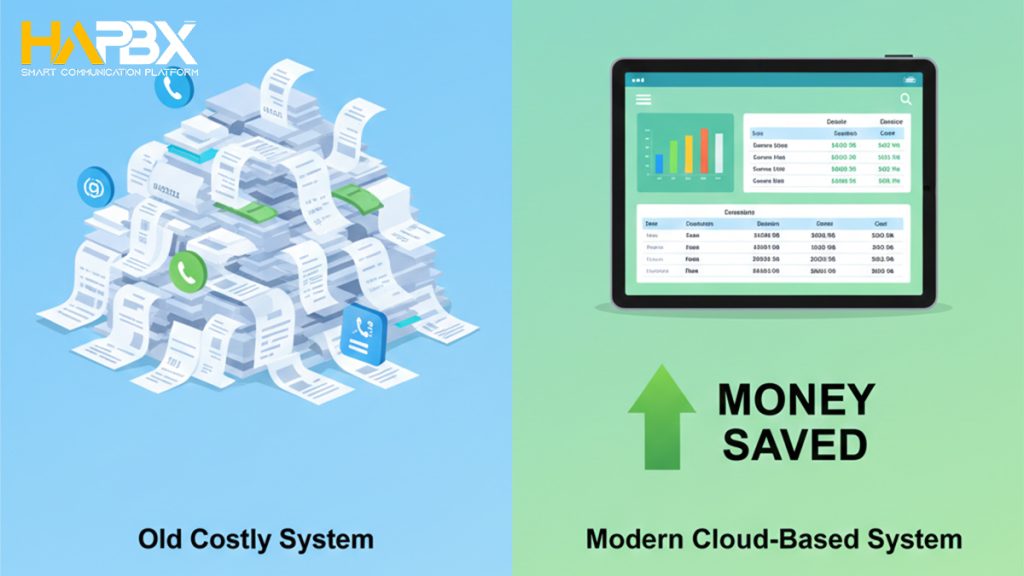
A Hosted PBX call accounting system represents a modern alternative to traditional on-premise solutions. Instead of requiring a dedicated PC, database, and ongoing maintenance infrastructure, these systems install only a lightweight program or dedicated hardware appliance (“black box”) at your office that captures call records and transmits encrypted data to a specialized call accounting data center.
Simplified Infrastructure and Maintenance
By moving data storage and processing offsite, hosted systems eliminate the need for dedicated servers, local database management, and backup procedures. Data center staff handle daily off-site backups, database maintenance, performance tuning, and system upgrades automatically – ensuring you always run the latest software version used by enterprise customers nationwide.
Enterprise-Grade Accessibility
Designed from inception as remotely accessed solutions, hosted systems support multiple user accounts with flexible access controls. Administrators can restrict access by department, region, or reporting permissions, while users can log in from any computer or mobile device anywhere using secure SSL web browsers (Internet Explorer, Firefox, Safari, Chrome) without installing special software. This works seamlessly across Windows, Apple, Linux, and mobile platforms.
Native Multi-Site Support
Unlike legacy systems retrofitted for multiple locations, hosted solutions are architected from day one to support multiple sites, multiple PBXs, and multiple user types without special configurations or nightly synchronization routines. This makes them ideal for organizations with distributed offices or branch networks.
Advanced Features and Customization
Hosted platforms typically include capabilities that would require expensive add-ons in traditional systems: custom database columns, personalized report layouts, scheduled email reports, toll fraud detection with automatic alerting, and support for both legacy key systems and modern VoIP PBXs.
Proactive Monitoring and Security
The system automatically monitors your PBX and local collection device, alerting you via email or SMS if problems occur – preventing the unnoticed data loss common with classic systems. All call information is transmitted using encryption, and all system access occurs through secure SSL connections, ensuring data protection throughout the process.
Common Applications of PBX Call Accounting
PBX Call accounting systems serve diverse business needs across industries, from revenue generation to operational optimization and regulatory compliance.
Service Billing and Provisioning: Professional services firms utilize call accounting software for client-based billing of phone usage through account codes, enabling accurate cost recovery and transparent client invoicing. The hospitality industry leverages these systems to resell telecommunications services to guests and groups with sophisticated markup algorithms, providing accessible rating and provisioning capabilities typically found in carrier-level operational support systems (OSS) and business support systems (BSS).
Departmental and Employee Chargeback: The original purpose of call accounting was corporate cost allocation. Enterprises use these systems to allocate telecommunication expenses back to divisions, departments, and individual employees, often integrating directly with corporate accounting and human resource systems for seamless financial management.
Cost and Revenue Optimization: Call accounting software consolidates multiple telecom carrier billing reports – including wireless billing, long-distance charges, and calling cards – into a single convergent expense management platform. This integration enables comprehensive management reports, analytics, alerts, and presentations that help organizations identify cost-saving opportunities and optimize telecommunication spending.
Staff Productivity Management: These systems provide visibility into employee calling patterns and activity, helping minimize productivity losses from non-business calls. They also evaluate the effectiveness of revenue-generating staff and sales processes while monitoring customer service responsiveness and performance metrics.
Network Optimization: Organizations use call accounting to determine whether voice and data networks operate efficiently and cost-effectively. Applications monitor network activity and bandwidth, identify over- and under-utilized trunks for optimal configurations, pinpoint circuit outage root causes, track call routing effectiveness, analyze queue times and abandoned calls, and report usage trends – enabling better resource allocation and strategic planning decisions.
Security and Compliance: Call accounting applications protect companies from internal and external security threats by monitoring for network attacks, intrusion attempts, and telecommunications activity exceeding acceptable thresholds. For regulatory compliance, particularly under standards like the Sarbanes-Oxley Act, these systems help secure critical infrastructure, document fraud-related costs for carrier disputes, automate internal communications monitoring, and provide the aggregation and reporting tools necessary to track expenses accurately and demonstrate proper internal controls.
Specialized Hospitality Applications: Hotels represent one of the most sophisticated call accounting use cases, requiring real-time processing and advanced chargeback capabilities. Hotel properties traditionally maintained call accounting systems for four key reasons: recovering long-distance costs, properly allocating and charging guests for phone usage, generating revenue through telecommunications resale, and tracking calls for marketing and planning purposes. However, given today’s low telecommunications costs, reduced phone usage rates, and limited on-property technical staff, hotels increasingly rely on centralized enterprise call accounting or fully managed telemanager services provided by third parties or corporate staff to handle the complete financial aspects of telecommunications usage and facilities.
HaPBX: A Reliable Foundation for PBX Call Accounting Success
The effectiveness of any PBX call accounting system depends directly on the reliability of the underlying PBX infrastructure. If your PBX experiences downtime, loses connectivity, or fails to transmit SMDR records consistently, your call accounting data will be incomplete or inaccurate – leading to serious issues with billing, compliance, and fraud detection.

Eliminating Traditional PBX Reliability Issues: HaPBX is built on a Global Cluster Infrastructure that completely eliminates the common problems plaguing classic PBX systems, such as server downtime, hardware failures, and cable disconnections. With its High Availability architecture, the system ensures near-absolute uptime – meaning your call accounting software never misses call records due to PBX unavailability.
Consistent Performance for Accurate Data: With latency consistently maintained around 50ms and never exceeding 150ms, HaPBX ensures call records are transmitted to your call accounting system accurately and in real-time. This consistent performance is particularly critical for real-time monitoring, fraud detection, and use cases requiring immediate alerting capabilities.
Seamless Integration with Call Accounting Solutions: HaPBX is compatible with both legacy and modern call accounting systems, supporting standard SMDR/CDR formats. The cloud-based architecture of HaPBX is especially well-suited for hosted call accounting solutions, creating a fully cloud-native telecommunications solution that eliminates dependence on complex on-premise infrastructure.
Scalability Without Compromising Data Integrity: As your business grows, HaPBX scales flexibly without impacting call accounting performance. Unlike traditional PBX systems that may encounter bottlenecks when handling large call volumes, HaPBX maintains consistent performance for call accounting operations at any scale, ensuring your telecommunication expense management remains accurate regardless of company size.
Conclusion: Building a Complete PBX Call Accounting Strategy
PBX Call accounting has evolved from a simple cost allocation tool into a comprehensive telecommunications management solution that drives financial optimization, enhances security, ensures compliance, and improves operational efficiency. While traditional on-premise systems have served businesses for decades, modern hosted call accounting solutions offer superior reliability, accessibility, and maintenance-free operation. However, the success of any call accounting implementation fundamentally depends on having a reliable, high-performance PBX infrastructure that consistently delivers accurate call data without downtime or connectivity issues.
Ready to Build a Rock-Solid Foundation for Your Call Accounting?
HaPBX provides the reliable, always-available Cloud PBX infrastructure your call accounting system needs to deliver accurate insights. With our Global Cluster Infrastructure and High Availability architecture, you’ll never lose critical call records due to system failures. Whether implementing call accounting for the first time or upgrading from a legacy system, HaPBX ensures your telecommunication data is captured completely and accurately – enabling you to focus on business growth while your infrastructure runs smoothly.
Contact HaPBX today to learn how our enterprise-grade Cloud PBX platform can support your call accounting needs and transform your telecommunications management.