
In Singapore’s highly competitive logistics and supply chain sector, communication is not just a support function—it is core operational infrastructure. Every delayed call, dropped connection, or moment of uncertainty directly impacts shipment coordination, customer trust, and contractual SLAs.
For Atlas Pacific Logistics, a mid-sized regional logistics provider headquartered in Singapore with operations across Southeast Asia, RingCentral initially seemed like the right choice. It was cloud-based, globally recognized, and easy to deploy.
However, as the business scaled, Atlas Pacific began actively evaluating RingCentral alternatives. What once enabled growth gradually became a constraint. This case study explains why RingCentral was no longer sufficient and how migrating to HAPBX, a dedicated Cloud PBX platform, restored stability, control, and long-term cost predictability.
Why Enterprises in Singapore Are Actively Seeking RingCentral Alternatives
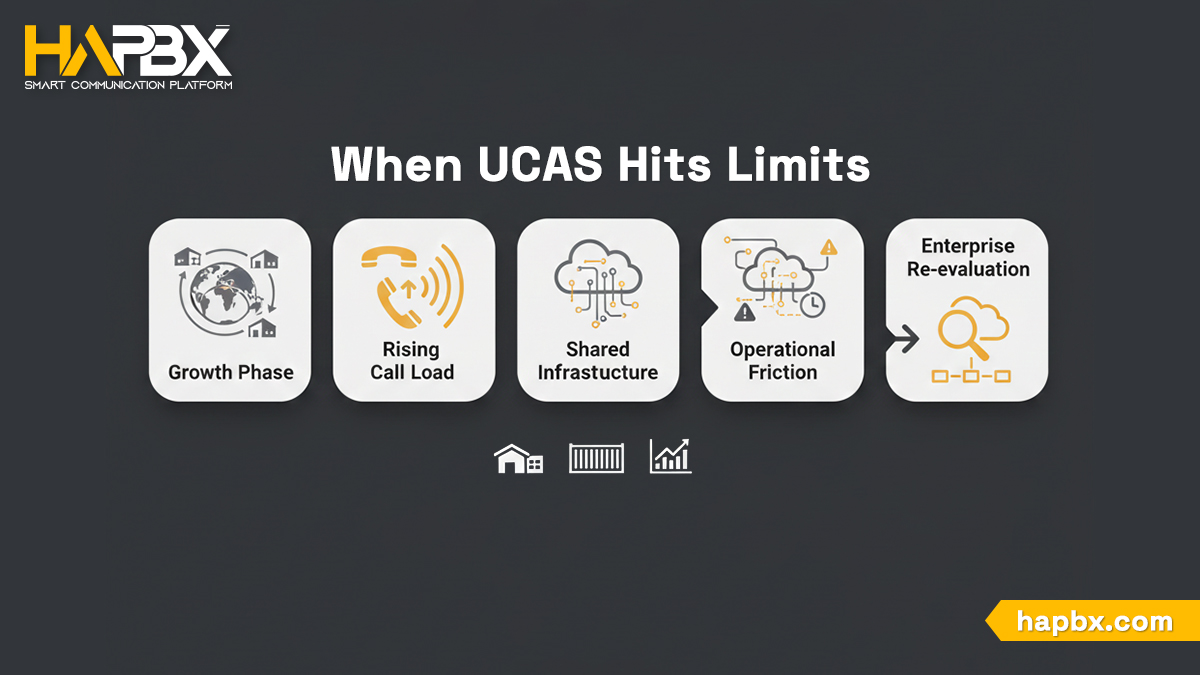
Atlas Pacific did not abandon RingCentral abruptly. The decision followed nearly two years of accumulated operational friction as the company expanded its regional footprint.
As call volumes increased and communication became deeply embedded in daily logistics operations, leadership began questioning whether a shared UCaaS model could continue supporting mission-critical workflows.
“RingCentral worked well when we were smaller. But once communication became a core operational dependency, we started noticing cracks.”
— Operations Director, Atlas Pacific Logistics
This experience reflects a growing regional trend: RingCentral alternatives are increasingly sought by enterprises that prioritize uptime, predictability, and architectural control over generic feature sets.
Cost Escalation: A Common Reason Companies Look for RingCentral Alternatives.
RingCentral’s pricing initially appeared straightforward. However, as Atlas Pacific scaled from 80 to over 300 active users across dispatch, customer service, and regional operations, costs increased disproportionately.
Key challenges included:
- Critical features locked behind higher-tier licenses
- Linear per-user pricing regardless of actual call concurrency
- Difficulty forecasting total cost of ownership beyond 12 months.
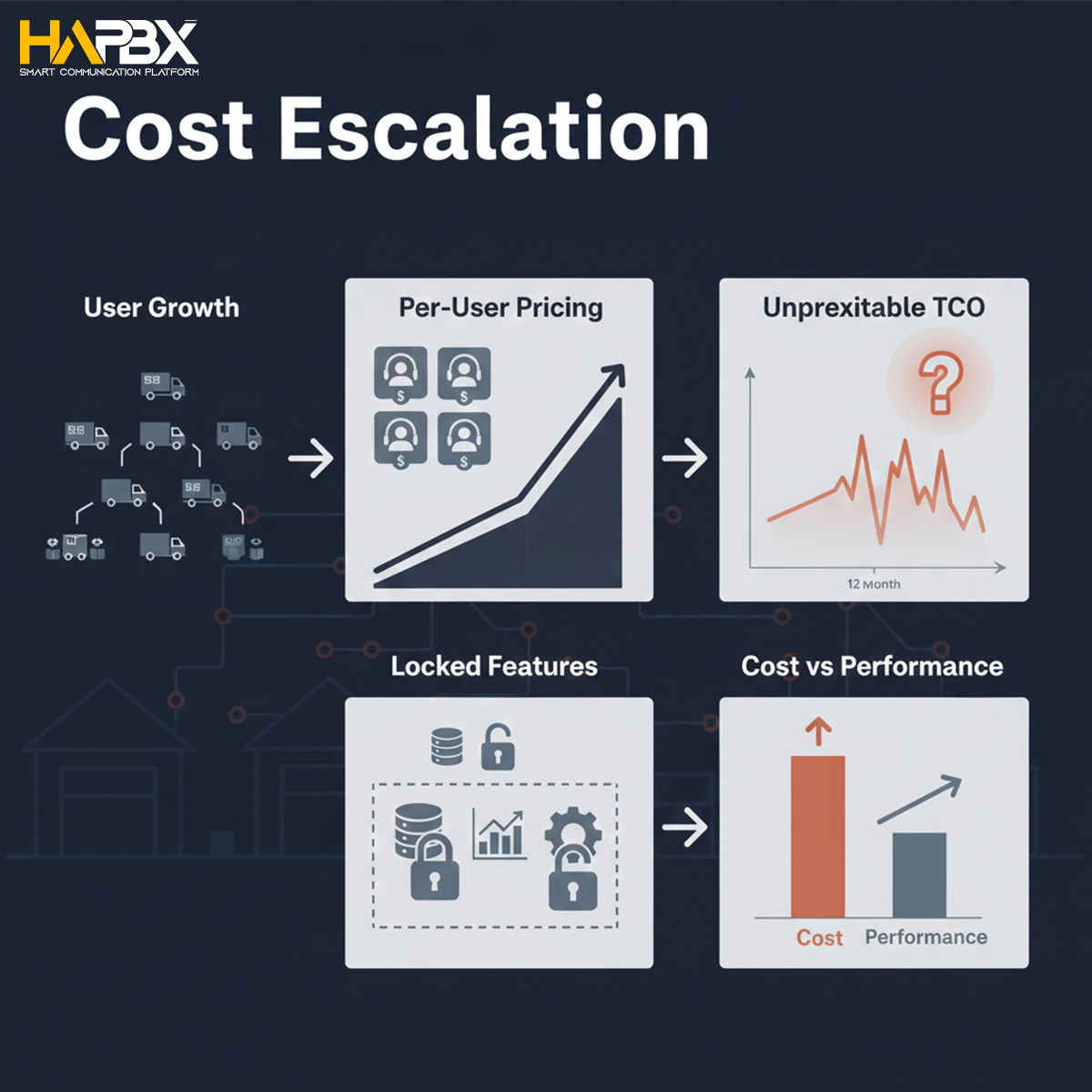
For a logistics company operating on tight margins, rising communication costs—without guaranteed performance improvements—became increasingly difficult to justify.
This cost-performance imbalance is one of the most common triggers driving enterprises to explore RingCentral alternatives.
Stability and Performance Risks of Shared UCaaS Platforms
Beyond cost, performance unpredictability became the more serious concern.
Like most UCaaS platforms, RingCentral operates on a shared, multi-tenant infrastructure. While efficient at scale, this model introduces unavoidable risks:
- Call quality degradation during regional peak hours
- Latency fluctuations affecting dispatch coordination
- Limited transparency during service degradation see
For Atlas Pacific, where dispatchers coordinate time-sensitive cargo movements across borders, even brief disruptions resulted in cascading delays.
“We weren’t experiencing constant outages—we were experiencing uncertainty. And uncertainty is unacceptable in logistics.”
This was the tipping point that prompted a deeper cloud PBX comparison focused on architectural fundamentals rather than surface-level features.
HAPBX: A Dedicated-Instance Alternative to RingCentral
During the evaluation of RingCentral alternatives, Atlas Pacific’s IT architects identified HAPBX (High Available Private Branch Exchange) as a fundamentally different option.
HAPBX does not position itself as a generic UCaaS platform. Instead, it is built around a Dedicated Instance Cloud PBX architecture, designed for enterprises where communication reliability directly affects revenue and operations.
HAPBX Advantages: Eliminating the “Noisy Neighbor” Risk
One of the most decisive HAPBX advantages is its dedicated-instance design.
Unlike RingCentral’s shared environment, HAPBX allocates isolated resources per enterprise, delivering:
- No resource contention with other tenants
- Predictable performance during peak logistics cycles
- Full separation of voice traffic and signaling
For Atlas Pacific, this architectural isolation removed the single largest risk factor present in shared UCaaS platforms.
Operational Benefits for Distributed Logistics Teams
After deployment, HAPBX delivered tangible improvements aligned with real-world logistics demands:
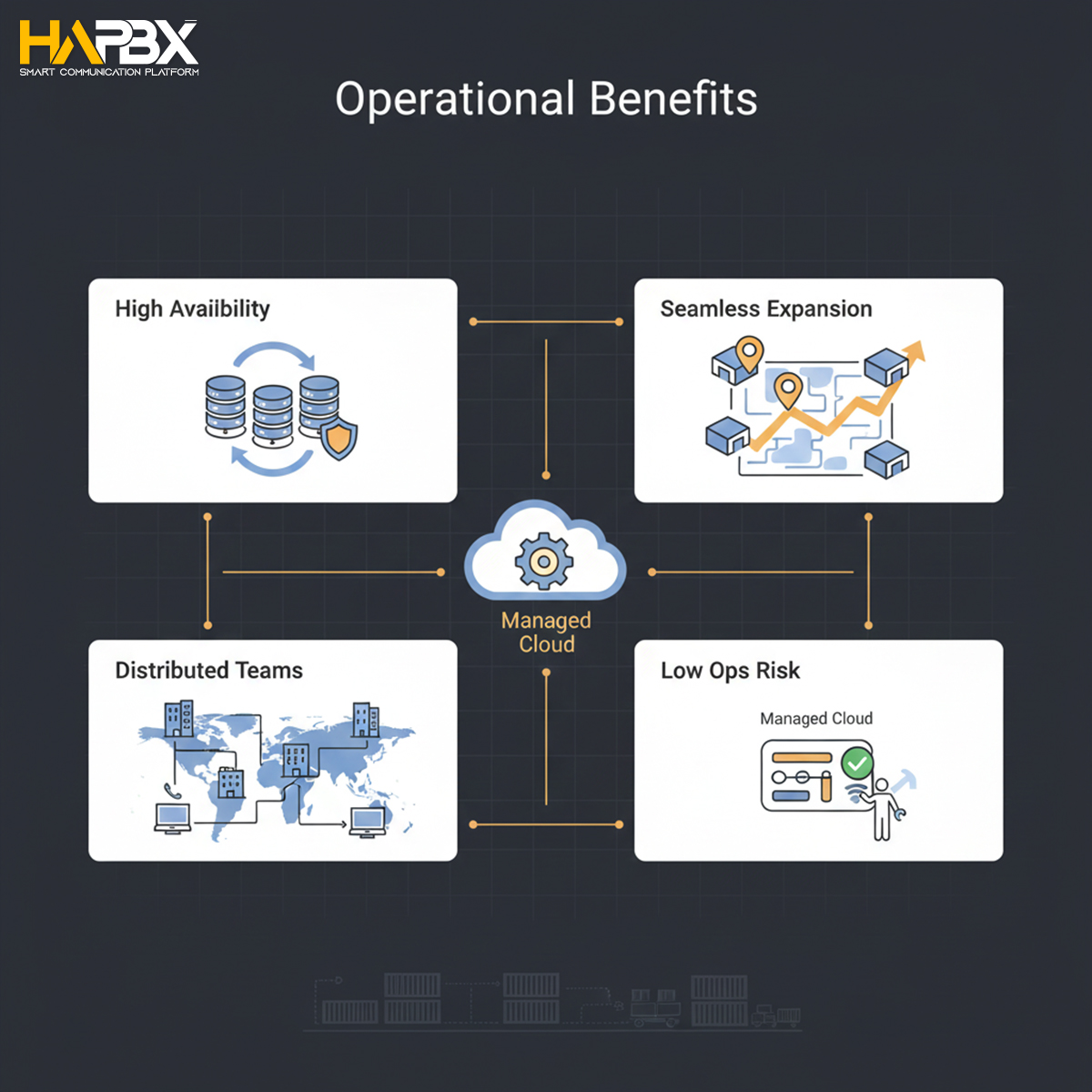
- High Availability: GEO-distributed clusters with automatic failover
- Seamless Expansion: New regional teams onboarded without rearchitecting
- Managed Cloud Model: Infrastructure complexity removed from internal IT
These outcomes reinforced the decision to move away from RingCentral toward a more enterprise-focused alternative.
Cloud PBX Comparison: HAPBX vs RingCentral
A practical cloud PBX comparison quickly highlighted structural differences.
| Feature | RingCentral | HAPBX |
| Infrastructure | Shared UCaaS | Dedicated Instance Cloud PBX |
| Performance | Dependent on tenant load | Predictable, guaranteed |
| Downtime Model | SLA-based tolerance | Near-zero downtime architecture |
| Security | Logical isolation | Physical & architectural isolation |
RingCentral remains suitable for general-purpose communication.
HAPBX, however, is engineered for environments where communication downtime is operationally unacceptable.
Scalability Without Forced Licensing Complexity
With RingCentral, scaling often meant plan upgrades or license restructuring.
With HAPBX, scaling was architectural—resources expanded without altering workflows.
This flexibility allowed Atlas Pacific to grow regionally without retraining teams or redesigning communication processes, a key factor when comparing RingCentral alternatives.
Evaluating Other RingCentral Alternatives in Singapore
Atlas Pacific also evaluated other popular options:
- Nextiva: Strong CX focus, still shared infrastructure
- Dialpad: AI-driven features, limited performance guarantees
- Zoom Phone: Seamless Zoom integration, not built for heavy operational call loads
Each had strengths, but none addressed the architectural risk inherent in shared UCaaS platforms.
Risk Management and Operational Certainty: Why the Assessment Ultimately Pointed to HAPBX
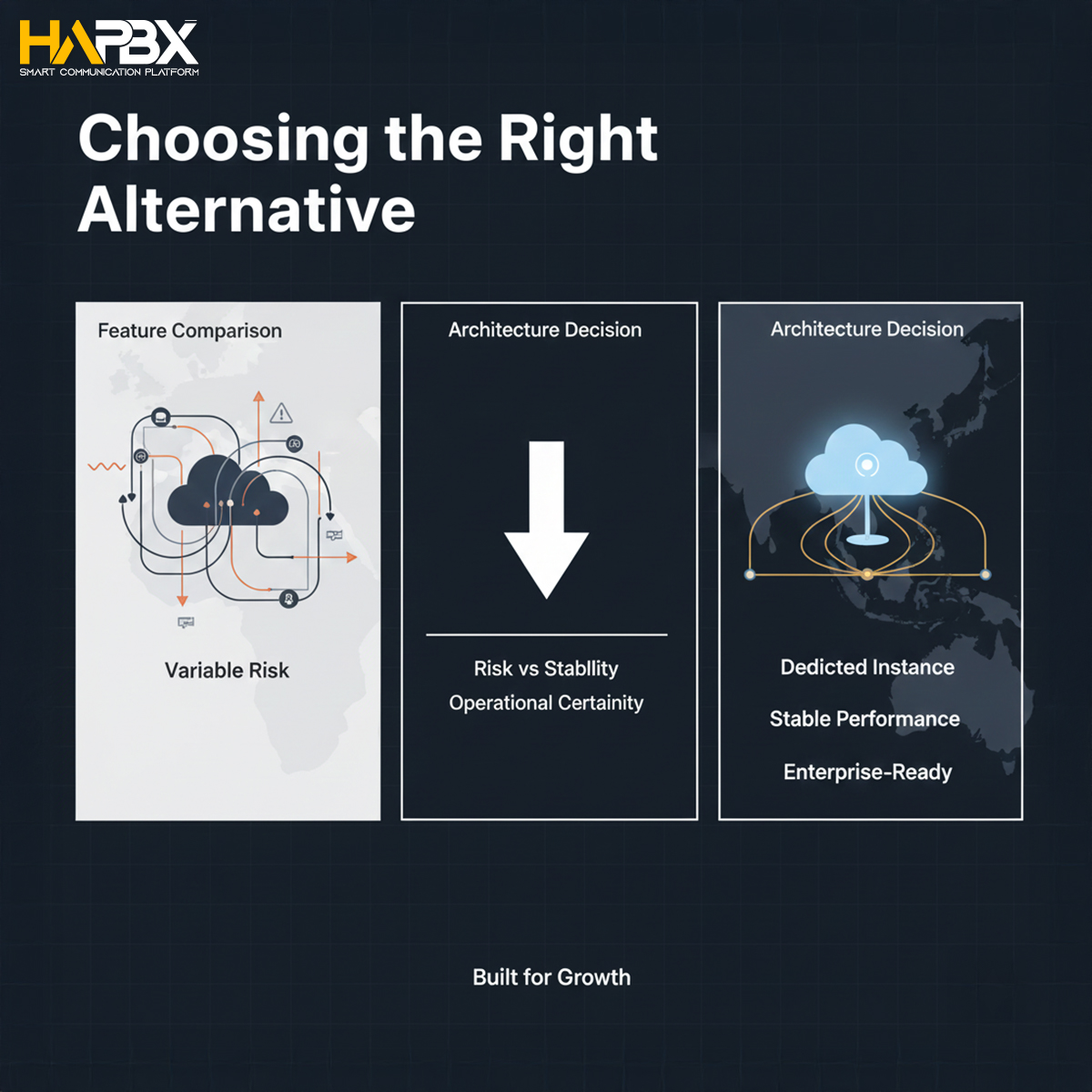
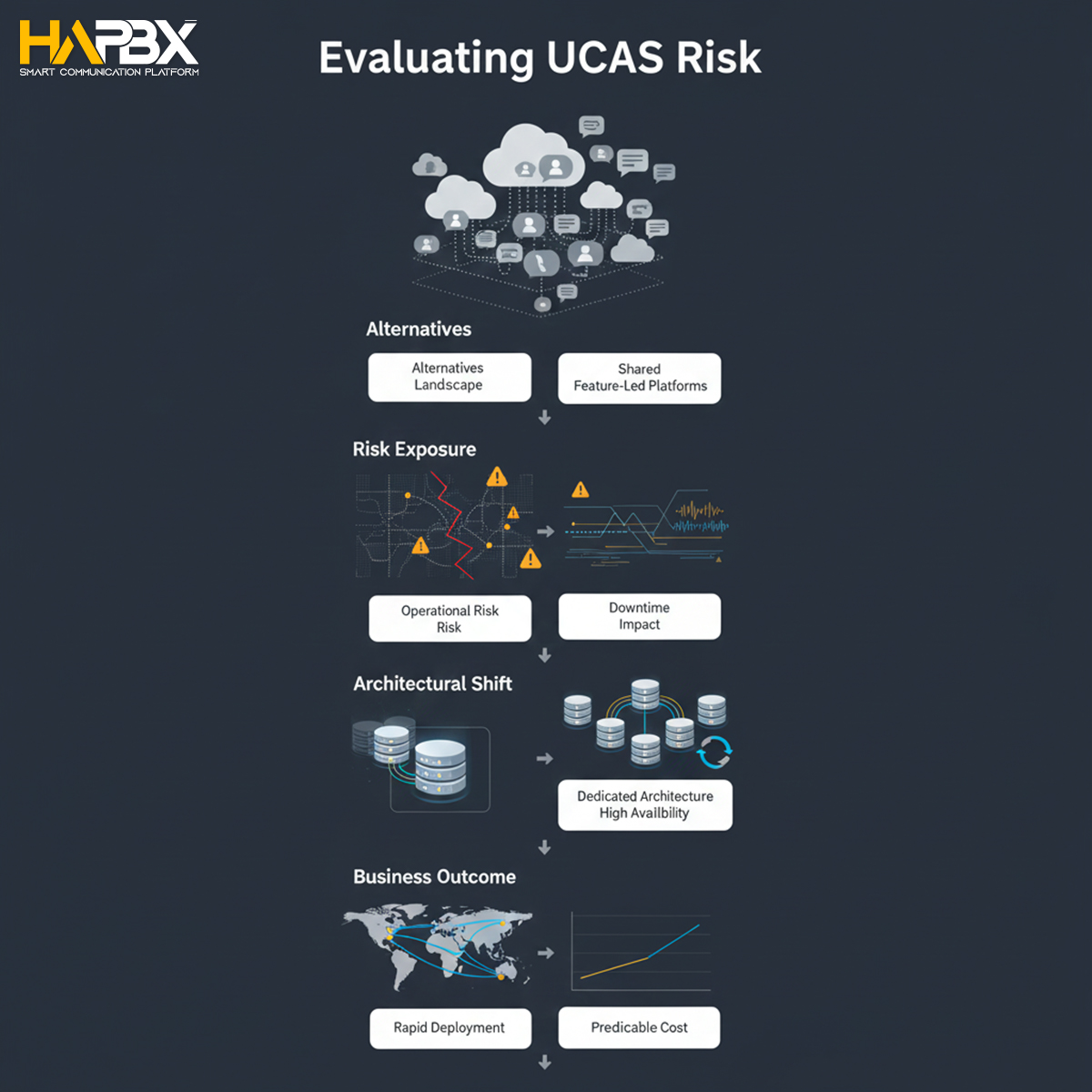
The final assessment was not driven by feature comparisons, but by a fundamental operational question: How much risk can the business afford in its communication infrastructure?
In industries such as logistics and transportation, communication failures are not minor technical issues—they
directly translate into delayed shipments, contractual penalties, lost trust, and cascading operational disruption.
Even short periods of downtime can impact multiple stakeholders across the supply chain.
One of the most decisive advantages of HAPBX was its ability to eliminate uncontrollable variables commonly found in shared or self-managed PBX environments. Instead of relying on best-effort infrastructure, HAPBX introduces a model where reliability, performance, and availability are built into the architecture from day one.
A Cloud PBX Built for Modern Enterprise Operations
HAPBX is an enterprise-grade Cloud PBX platform specifically designed to address three core requirements of modern communication systems: rapid deployment, operational stability, and long-term cost optimization.
Rapid Deployment: Communication Ready in Minutes
Traditional PBX systems often require weeks of planning, infrastructure investment, and complex configuration. HAPBX removes these barriers entirely.
With a cloud-native, dedicated-instance architecture, enterprises can have a fully operational PBX system ready in minutes—without deploying physical hardware, provisioning servers, or maintaining specialized VoIP infrastructure. This allows businesses to accelerate go-live timelines, respond quickly to operational changes, and scale communications without friction.
Operational Stability: Built-In High Availability by Design
Unlike conventional cloud PBX solutions that rely on shared environments, HAPBX operates on a GEO-distributed global cluster infrastructure, designed for continuous availability.
The platform incorporates clustering and automated failover mechanisms, ensuring that communication services remain available even during node failures or regional incidents. This architecture minimizes single points of failure and delivers consistent call quality under sustained operational load—an essential requirement for enterprises where communication uptime directly affects revenue and service quality.
Long-Term Cost Optimization: Predictability Over Short-Term Savings
HAPBX’s dedicated cloud model provides a fundamentally different cost structure compared to traditional PBX systems and many popular hosted PBX solutions.
By eliminating hardware investments, reducing operational overhead, and avoiding per-extension or unpredictable scaling costs, enterprises gain clear and predictable long-term communication expenses. This predictability becomes increasingly valuable as the organization grows, preventing hidden costs and performance degradation often associated with shared infrastructure models.
Infrastructure That Scales Ahead of the Business
Atlas Pacific’s leadership recognized that communication infrastructure must scale before operational complexity increases—not after problems emerge.
HAPBX delivers:
- A future-ready dedicated architecture designed for enterprise growth
- Stable performance under increasing call volumes and organizational expansion
- Predictable long-term costs that support strategic planning rather than reactive spending
In this context, HAPBX is not merely a PBX replacement—it is a risk-mitigation layer that ensures communication remains a stable foundation as the business scales.
Conclusion: Choosing the Right RingCentral Alternative
For enterprises in Singapore operating in high-dependency industries, selecting among RingCentral alternatives requires more than feature comparison.
This case demonstrates that HAPBX stands apart as an enterprise Cloud PBX platform built on Dedicated Instance infrastructure—designed for organizations that demand stability, security, and predictable performance.
For Atlas Pacific Logistics, migrating from RingCentral to HAPBX was not just a platform change. It was an operational safeguard that turned communication from a variable risk into a reliable foundation for growth.