
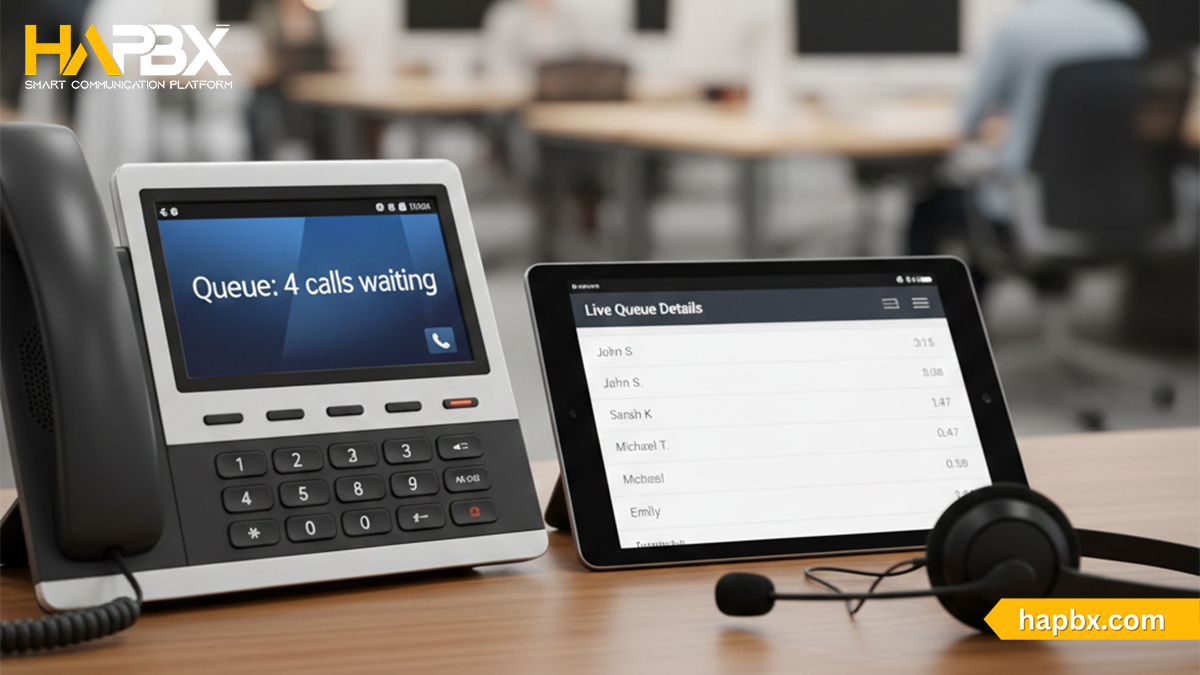
Nothing frustrates customers more than waiting on hold for extended periods or being transferred multiple times before reaching the right person. Research shows that 44% of customers become irritated after just five minutes on hold, while 90% expect immediate responses to their inquiries. Cloud PBX call queues addresses these challenges by systematically managing incoming calls, reducing wait times, and ensuring efficient routing to qualified agents. This comprehensive guide covers everything from call queue fundamentals to advanced optimization strategies, including how HaPBX Cloud-based platform helps businesses deliver seamless customer experiences while maximizing agent productivity.
What Is Cloud PBX? Why does your business need it?
Understanding Call Queues Systems
What is a Cloud PBX Call Queue?
A call queue is a telecommunications feature that manages incoming calls by placing them in a virtual waiting line when all agents are busy. Instead of receiving a busy signal, callers are held in an organized queue until a representative becomes available to assist them.
Calls are typically handled in the order they arrive, though businesses can create priority queues for VIP customers or urgent inquiries. Modern call queue systems enhance the waiting experience with features like hold music, automated announcements, and estimated wait times to keep callers informed and engaged.
Call queues are commonly used alongside Auto Attendants (IVR) or receptionist-based routing to ensure calls reach the right department efficiently. For call centers and customer service teams, they’re essential for managing high call volumes while maintaining a smooth customer experience and ensuring no calls are missed.
Why Modern Businesses Need Cloud PBX Call Queues Solutions
Cloud PBX Call queues are essential for managing inbound call traffic during peak periods. When call volume exceeds available staff – for example, 10 simultaneous calls with only 5 agents available – call queues prevent callers from reaching voicemail or getting a busy signal. Instead, they’re placed on hold with the assurance that they’ll be served soon.
A key benefit is keeping callers informed through regular queue position announcements. This transparency gives customers hope that they’re progressing toward the front of the line, reducing frustration and abandoned calls. It also empowers callers to make informed decisions – they can choose to wait if the queue is moving or call back later if wait times are too long.
For support teams, Cloud PBX call queues provide visibility into call volume, alerting agents when multiple callers are waiting. This helps staff prioritize efficiency and manage their current calls effectively, ensuring better overall service delivery.
How Cloud PBX Call Queues Work
Call flow and routing logic
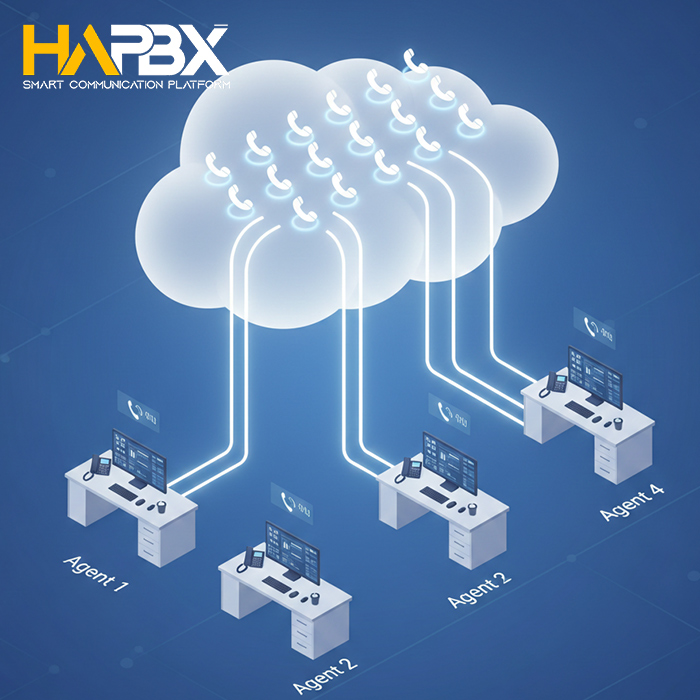
When a customer calls your business during high call volume periods, the call is automatically accepted into the queue instead of ringing out. An automated message informs the caller they’re on hold, ideally providing their position in line and estimated wait time so they can decide whether to continue waiting.
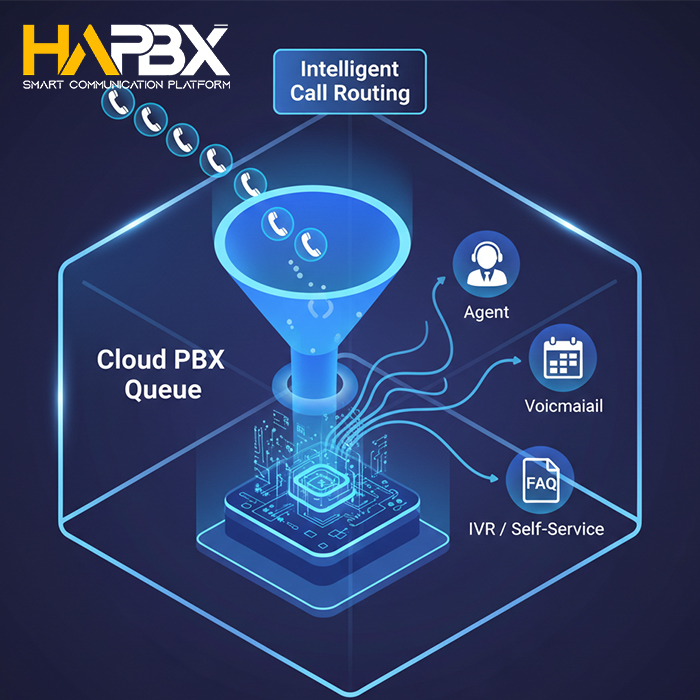
The IVR (Interactive Voice Response) or auto attendant collects key information – such as the caller’s phone number, ID, and inquiry purpose – to determine which agent is best suited to handle the request. Meanwhile, callers hear hold music and receive regular queue position updates. For longer waits, the system may offer a callback option.
When the caller reaches the front of the line, the Automatic Call Distribution (ACD) system routes them to the appropriate agent based on pre-configured rules like skills, availability, or call priority. The agent receives caller details in advance, enabling them to provide efficient, personalized service without requiring customers to repeat information.
How Cloud PBX call queues software works
Cloud PBX call queue systems operate on a first-come, first-served principle, with new calls joining the end of the line. However, modern systems offer sophisticated routing options based on caller priority, agent skills, or call purpose to ensure optimal handling.
The ACD system receives incoming calls and assesses agent availability. If all agents are busy, calls enter the queue and are intelligently routed based on factors like customer priority level, wait time, or inquiry type. The system strategically matches callers with the most suitable available agent – considering skills, language proficiency, and workload distribution – rather than simply connecting the next call in line.
Administrators configure queues with parameters like maximum queue length and timeout settings. If limits are reached, callers may be redirected to voicemail or offered callback options. Post-call, the system logs interactions, updates KPIs, and may trigger automated surveys. Modern systems use data analytics and machine learning to continuously optimize the queuing process and improve customer experience.
Call queues types & routing strategies
Call queuing is highly customizable, allowing businesses to choose the approach that best fits their needs. Here are the four main types:
- Linear call queue operates on a simple first-come, first-served basis. It’s the easiest to understand and manage, requiring minimal configuration after initial setup. This approach works well for businesses with straightforward customer inquiries and no need for priority handling.
- Circular call queue distributes calls evenly among agents in a cyclical manner. Once an agent completes a call, they move to the bottom of the distribution list, and the cycle repeats. This balances workload and prevents agent burnout, making it ideal for teams with similar skill levels handling the same types of calls.
- Priority-based call queue allows businesses to prioritize calls based on predefined criteria like customer value, urgency, or inquiry type. High-value customers, emergency requests, or technical support issues can be moved to the front of the line. This approach is valuable for businesses with diverse customer needs where some clients require or expect faster service.
- Skills-based routing matches callers with agents who have the specific expertise needed to handle their inquiries – such as technical knowledge, multilingual support, or familiarity with certain products. This increases first-call resolution rates and shortens call times by ensuring customers reach the right expert immediately. It’s ideal for complex environments like tech support, multilingual call centers, or omnichannel contact centers managing multiple communication channels.
Troubleshooting: Common Queue Challenges and Proven Solutions
While Cloud PBX call queues are invaluable for managing incoming calls, they come with challenges that can impact both customer satisfaction and operational efficiency.
- Balancing agent workload vs. customer wait times requires finding the sweet spot between keeping agents productively engaged and minimizing hold times. Use real-time monitoring and call analytics to gain insights into call patterns, agent performance, and wait times. This data helps optimize staffing levels, adjust routing strategies, and make informed decisions to achieve the ideal balance.
- Handling unexpected call volume spikes from system outages, product launches, or marketing campaigns can strain resources. Implement proactive overflow strategies like virtual queuing (where customers opt for callbacks instead of holding) or temporary staffing solutions to manage peaks without compromising service quality.
- Insufficient staffing is a common cause of long queues. This often stems from poor scheduling and failure to predict peak times – such as during major campaigns or holiday seasons. When understaffed, employees become overwhelmed and callers face excessive wait times.
- Lack of proper training leads to longer call handling times. When agents lack sufficient product knowledge or can’t handle complaints effectively, they must transfer calls or place customers back on hold while searching for information, reducing first-call resolution rates.
- Ineffective technology significantly hinders call queue performance. Outdated systems can’t handle high volumes or provide intelligent routing features. Without proper data collection at call initiation or AI-powered distribution, calls get passed around inefficiently.
- Limited contact options force all customers into phone queues. Without self-service options, alternative communication channels, or callback systems, queues become unnecessarily long. Offering multiple contact methods helps distribute demand and reduce phone queue pressure.
- Ensuring agent adherence to protocols is crucial, as agents might occasionally bypass queues or prioritize callers based on personal bias. Regular training on queuing protocols and consistent performance monitoring ensure agents follow procedures and maintain fairness in the process.

Essential Cloud PBX Call Queues Features and Capabilities
Modern call queue systems include several essential features that enhance both customer experience and operational efficiency:
- Automatic Call Distribution (ACD) intelligently routes calls to the most suitable agent based on skills, availability, and priority, ensuring efficient handling and reduced wait times while improving both customer satisfaction and agent productivity.
- Queue announcements keep callers informed with regular updates on their estimated wait time or position in line. This transparent communication manages expectations, reduces frustration, and builds customer trust.
- Hold music and messages enhance the waiting experience with carefully curated audio content. Auto-attendants make holds more tolerable and provide opportunities for subtle marketing or brand reinforcement.
- Interactive Voice Response (IVR) reduces agent workload by offering self-service options for common inquiries and streamlining call routing. This empowers customers to resolve simple issues independently while freeing agents to handle complex cases.
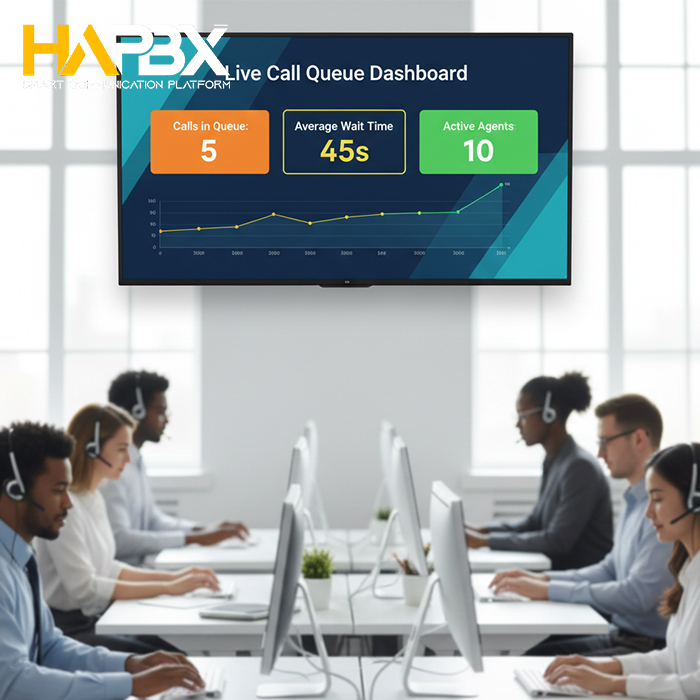
- Real-time queue monitoring allows supervisors to track call volumes, wait times, and agent availability in real time, enabling data-driven decisions for better resource allocation and optimized efficiency.
- Queue whisper provides agents with key caller information before the call connects – such as the reason for calling or previous interactions – enabling personalized service from the first moment.
- Post-call surveys gather valuable customer feedback directly after interactions, providing insights to continuously improve service quality and agent performance.
- Integration with chatbots and live agents enables smooth transitions between automated and human support, ensuring customers receive consistent assistance across all communication channels for a truly unified omnichannel experience.
Business Advantages of Implementing Cloud PBX Call Queues
Effective call queue implementation delivers significant advantages for both customers and businesses:
- Enhanced customer experience: Reduced wait times, transparent communication with real-time updates, and personalized service create positive interactions that build customer loyalty and strengthen brand reputation.
- Increased agent efficiency: Balanced workload distribution, intelligent call prioritization, and skills-based routing help agents work more effectively, leading to improved job satisfaction and reduced burnout across teams.
- Improved first-contact resolution: Matching customers with the most qualified agent increases the likelihood of resolving issues during the initial call, saving valuable time and resources for both parties.
- Streamlined operations: Strategic queuing and smart agent allocation reduce hold times and call abandonment rates, resulting in cost savings and better resource utilization across your contact center.
- Actionable analytics: Call queue systems generate valuable data on customer behavior patterns and agent performance metrics, enabling you to identify improvement opportunities and make informed decisions that continuously optimize your operations.
Strategic Cloud PBX Call Queues Management Approaches
Why Effective Queue Management Matters
Customer expectations for service responsiveness have never been higher. Research shows that 90% of customers consider immediate responses essential when seeking support, while 44% report feeling annoyed or irritated after just five minutes on hold. Extended wait times or unsatisfactory resolutions create frustrating experiences that can damage customer relationships.
Effective call queue management is critical for several key reasons:
- Elevates customer satisfaction: Strategic queue management minimizes hold times and ensures prompt call handling, resulting in happier customers who feel valued and respected.
- Maximizes resource efficiency: Improved queue productivity enables businesses to utilize their workforce more effectively, ensuring calls are handled in an organized, timely manner that boosts overall operational performance.
- Strengthens brand perception: A well-orchestrated queue system elevates your company’s reputation by consistently delivering positive service experiences, fostering customer loyalty and long-term trust.
- Enables continuous improvement: Modern queue management tools capture valuable interaction data, providing actionable insights that drive data-informed enhancements to your customer service processes.
- Creates competitive advantage: In today’s crowded marketplace, superior customer service sets businesses apart. Companies with inefficient, time-consuming call center experiences risk losing customers to competitors who offer smoother, more responsive support.
How to improve Cloud PBX call queues management
Improving Cloud PBX call queue management requires strategic planning focused on operational efficiency. Here are core strategies to optimize your queue performance:
- Study call volume trends: Examine historical call data to pinpoint peak periods and identify recurring customer issues. These insights provide a foundation for workforce planning and system configuration.
- Enhance workforce planning: Use workforce management tools to ensure appropriate agent coverage during high and low-traffic periods. Strategic scheduling of breaks and shifts maintains consistent service levels throughout the day without coverage gaps.
- Deploy skill-based routing: Direct calls to agents with relevant expertise for each inquiry type. This eliminates unnecessary transfers, accelerates resolution times, and ensures customers reach the right person on the first attempt.
- Define priority hierarchies: Create clear protocols for urgent or high-priority issues, allowing critical calls to bypass standard queue sequences. Well-defined priority levels ensure timely handling of sensitive matters while maintaining fairness.
- Expand self-service capabilities: Deploy IVR menus, knowledge bases, and chatbots to handle routine inquiries without agent involvement. Removing simple requests from the queue frees agents to focus on complex issues requiring human expertise.
- Monitor and adjust dynamically: Use real-time monitoring tools to track queue performance as it happens. Adjust staffing levels or routing configurations immediately when call volume fluctuates unexpectedly to prevent bottlenecks.
- Leverage ongoing analytics: Continuously analyze queue performance metrics to spot trends, identify bottlenecks, and predict future high-volume periods. Use these insights to make data-driven decisions that systematically enhance your processes.
Best Practices for Setting Up & Optimizing Cloud PBX Call Queues
Beyond core strategies, these implementation best practices ensure your Cloud PBX call queues deliver exceptional customer experiences:
- Invest in comprehensive training: Ensure every customer-facing employee receives thorough training on handling various scenarios – from technical questions to complaint resolution. Build a library of recorded calls showcasing best practices, and familiarize staff with all call management features and protocols.
- Choose the right technology stack: Select a system with robust capabilities including IVR/auto attendant, CRM integration, and intelligent routing with flexible configuration. The best platforms combine queuing with comprehensive communication tools and detailed analytics in one unified solution.
- Create a pleasant hold experience: When waiting is unavoidable, make it comfortable. Select appropriate hold music that matches your brand and audience, provide helpful informational messages, and always give honest wait time estimates. Upload custom audio files instead of using generic default options.
- Offer multiple contact channels: Don’t force customers into phone queues as their only option. Provide callback requests, voicemail alternatives, live chat, email support, and self-service portals. Give customers the flexibility to choose their preferred communication method.
- Set intelligent queue limits: Configure maximum queue sizes and wait time thresholds that automatically trigger alternative options like callbacks. This prevents customer frustration and abandoned calls when queues become too long.
- Create specialized queue paths: Establish priority channels for VIP customers who expect premium service, or set up dedicated queues for urgent situations like fraud reports, emergency claims, or technical outages that require immediate attention.
- Personalize based on caller data: Use caller ID and CRM integration to recognize returning customers, VIP status, or previous interaction history. Provide agents with this context through queue whisper features so they can deliver personalized service from the first moment.
How HaPBX Implements Cloud PBX Call Queues Best Practices
HaPBX Cloud PBX platform delivers powerful call queue management with features designed to enhance both customer experience and operational efficiency.
Intelligent Routing and Real-Time Control
HaPBX supports all major routing strategies – linear, circular, priority-based, and skills-based – with flexible configuration that adapts to your business needs. The real-time dashboard gives supervisors instant visibility into queue performance, wait times, and agent availability, enabling quick adjustments during peak periods or unexpected call spikes.
Seamless Integration and Context
Integration with popular CRM systems and business tools provides agents with complete caller context before answering. Queue whisper and screen pop features display customer history and previous interactions instantly, eliminating redundant questions and accelerating resolution times.
Real-Time Monitoring and Analytics
The HaPBX dashboard provides comprehensive visibility into queue performance metrics. Track active calls, abandonment rates, and agent productivity in real time. Historical analytics reveal call patterns, peak periods, and performance trends, enabling data-driven decisions for staffing optimization and continuous process improvements.
Cloud-Based Scalability
Built on reliable cloud infrastructure with 99.9% uptime, HaPBX scales effortlessly as your business grows. Add agents, expand capacity, or activate new features without hardware investments. Intuitive setup and 24/7 support ensure your team can launch and optimize call queues quickly.
HAPBX – The Premier High Available Private Branch Exchange (Cloud PBX) for Enterprise Communication
FAQs
Are call queues and phone queues the same thing?
Yes, these terms are interchangeable. Both refer to the system that holds and organizes incoming calls until agents become available to handle them.
What’s the ideal wait time for callers in a queue?
Industry best practices recommend keeping wait times under 2 minutes for optimal satisfaction. Since 44% of customers become frustrated after just 5 minutes on hold, prioritize shorter waits whenever feasible.
What happens if a call queue gets too full?
Most systems have maximum queue limits. When reached, new callers may receive a busy signal, be redirected to voicemail, or offered a callback option instead of joining the queue.
Are call queues compatible with all phone types?
Absolutely. Queue systems work seamlessly with landlines, mobile devices, and VoIP systems. The caller’s device type doesn’t impact how the queue manages their call.
Can I customize hold music and messages?
Most VoIP phone services allow you to customize hold music and messages played while callers wait. This creates opportunities to share helpful information, reinforce your brand, or enhance the customer experience.
How do I track call queue effectiveness?
Monitor key metrics including average wait time, call abandonment rate, first-call resolution rate, and customer satisfaction scores. These KPIs provide valuable insights into queue performance and highlight improvement opportunities.
Conclusion: Elevating Your Call Management Strategy
Effective Cloud PBX call queues management is no longer optional – it’s essential for delivering the responsive, professional customer service that today’s consumers expect. By implementing the right strategies, technology, and best practices outlined in this guide, businesses can transform their Cloud PBX call queues from a source of frustration into a competitive advantage that drives customer satisfaction and operational efficiency.
Transform Your Call Queues Management with HaPBX
HaPBX’s cloud PBX platform makes implementing these best practices simple and affordable. With intelligent routing, real-time analytics, seamless CRM integration, and enterprise-grade reliability, HaPBX gives you everything needed to optimize your Cloud PBX call queues and deliver exceptional customer experiences. Our intuitive setup, 24/7 support, and scalable infrastructure ensure your call management grows with your business.
Ready to reduce wait times, increase first-call resolution, and boost customer satisfaction? Experience the HaPBX difference with a free trial or schedule a personalized demo to see how our call queue solution can transform your customer service operations.