

As businesses continue shifting toward flexible and cost-efficient communication systems, Cloud PBX has emerged as a powerful alternative to the traditional one. By operating entirely in the cloud, it removes the need for physical hardware, reduces maintenance costs, and offers advanced capabilities such as smart call routing, IVR, analytics, and seamless support for remote or hybrid teams.
As a trusted provider of cloud-based communication solutions, HaPBX helps businesses transition smoothly to Cloud PBX and take full advantage of its scalability, reliability, and modern feature set. Whether you’re exploring cloud telephony for the first time or evaluating providers, this guide will equip you with the essential knowledge to understand Cloud PBX and choose the right solution with confidence.
What is Cloud PBX?
A Cloud PBX (Cloud-based Private Branch Exchange) is a virtual phone system that manages and routes business calls over the internet instead of using traditional on-site hardware. Unlike legacy PBX systems wired to the PSTN (Public Switched Telephone Network), a Cloud PBX runs on VoIP technology and is hosted in secure remote data centers.
This means no bulky equipment, no costly maintenance, and no need for dedicated IT support. Businesses can simply connect their phones to the internet and access advanced features such as call routing, auto-attendants, voicemail, extensions, and team collaboration tools.
Because everything is handled in the cloud, companies gain a more flexible, scalable, and cost-efficient communication system – ideal for modern, remote, and growing teams.
Why Businesses Are Moving to Cloud-Based PBX Systems
Nowadays, traditional, on-premises PBXs no longer fit the way modern teams work. When workforces became remote and hybrid, IT teams struggled with hardware-dependent systems that were expensive to maintain, difficult to access, and impossible to scale quickly.
Cloud PBX removes those limitations by routing calls over the internet. With no physical equipment to manage, businesses gain a flexible, mobile-friendly system that allows employees to communicate and collaborate from anywhere. All they need is a stable internet connection. The shift also reduces hidden hardware costs, simplifies IT workloads, and provides a more professional setup – especially for remote teams who no longer need to use personal phone numbers.
Cloud PBX solution isn’t perfect for every situation: businesses with unreliable internet or weak cybersecurity may face challenges. But for most organizations, the agility, scalability, and cost savings of cloud-based phone systems make the switch not only practical – but essential for the future of work.
Cloud PBX vs. Analog PBX: Why HAPBX Is the Future of Business Communication
How a Cloud PBX Works?
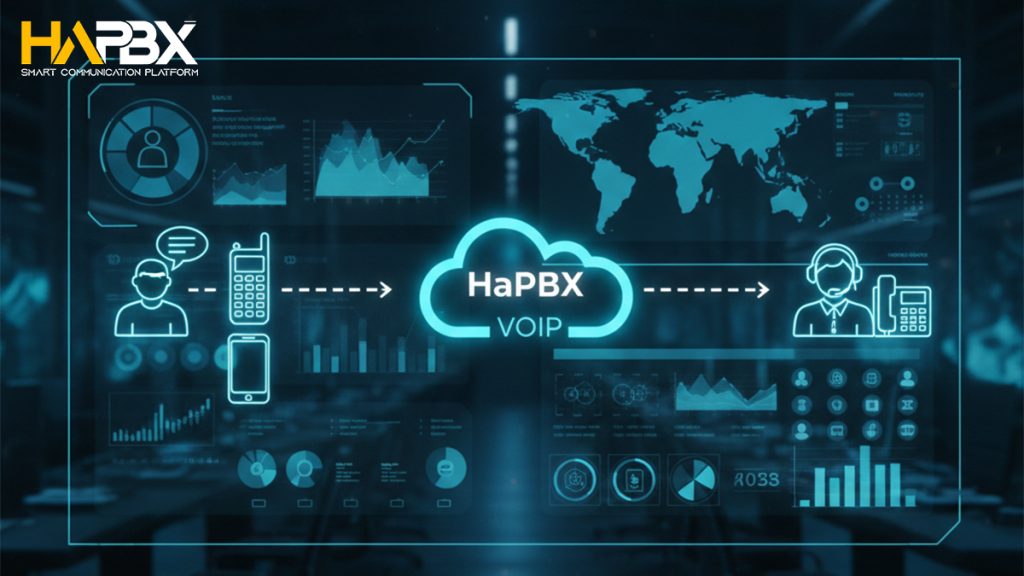
A Cloud PBX runs entirely over the internet, with all call routing and phone system functions hosted in secure data centers instead of on-site hardware. Users connect through VoIP using desk phones, IP phones, or softphone apps on their computers and mobile devices.
Calls are managed, routed, and monitored by the provider’s cloud infrastructure, allowing teams to work from anywhere with a stable internet connection. The system delivers core PBX features – such as extensions, call forwarding, and auto attendants – while remaining flexible and easy to scale.
Modern platforms like HaPBX are built on this cloud architecture, ensuring high availability, reliable call handling, and seamless communication across distributed teams without the complexity of traditional PBX systems.
Cloud PBX vs Other Phone Systems
Choosing the right phone system is critical for modern businesses. Traditional PBX, On-Premises PBX, Virtual PBX, and Cloud PBX each offer different advantages in terms of cost, flexibility, maintenance, and scalability. The table below compares these four solutions across the key factors that matter most when making your decision.
| Criteria | Traditional PBX | On-Premise PBX | Virtual PBX | Cloud PBX | HaPBX (Enterprise Cloud PBX) |
| On-site hardware requirement | Yes (cabinets, cards) | Yes (servers & IP phones) | No | No | No – dedicated cloud instance, no hardware needed |
| Installation Complexity & cost | Very complex & expensive | Complex & costly | Easy & low cost | Very easy & usually free | Minutes to deploy, no upfront hardware costs |
| Contract & early termination fees | Long contracts + high fees | Required + termination fees | Flexible, some have fees | No long-term contracts, no penalties | Flexible monthly/annual, no lock-in penalties |
| New features & upgrades | Manual & very expensive | Paid upgrades | Usually included | Automatic, frequent & free | Automatic, AI-enhanced features included & free |
| Technical support | Limited hours, extra fee | Premium support = extra cost | 24/7 (varies by provider) | 24/7 standard | 24/7 dedicated enterprise support + priority response |
| Maintenance responsibility | Expert technicians needed | Requires skilled IT staff | Mostly handled by provider | Fully managed by provider (any device) | Fully managed – no IT burden, geo-redundant |
| Service change request process | Very long & complicated | Lengthy request process | Quick (online portal) | Instant (add/remove lines in seconds) | Instant self-service with dedicated support |
| Scalability (add off-site extensions) | Extremely difficult | Difficult & costly | Easy | Easiest – instantly scalable anywhere | Unlimited extensions/calls, geo-scalable instantly, 99.99% uptime SLA |
Key features of a modern Cloud PBX
Modern Cloud PBX systems go far beyond basic call routing, offering a full suite of features to support today’s fast-moving teams:
- Interactive Voice Response (IVR): Automated menus that help callers navigate using keypad or voice commands.
- Visual Voicemail: Access and manage voicemails from any device with message previews, forwarding, and quick callbacks.
- Real-time Quality of Service Analytics: Detailed call logs, performance reports, and audit trails for full system visibility.
- AI-powered Video Meetings: HD video calls with screen sharing, whiteboarding, collaborative notes, and in-meeting chat.
- AI Meeting Transcripts: Automatic summaries, highlights, and live transcriptions to speed up follow-ups.
- Integrations: Connect with CRMs and business apps or build custom workflows using APIs and SDKs.
- Auto Call Recording: Record inbound and outbound calls, then play back or download as needed.
- Internet Fax: Send and receive faxes online without hardware, to and from any traditional machine.
- Multi-site Management: Manage multiple office locations under one account with site-specific settings.
What are the benefits of Cloud PBX?
Cloud PBX systems offer all the advantages of internet-based communication while eliminating the limitations of traditional on-premises phone hardware. Key benefits include:
- Remote Calling Flexibility: Employees can make and receive business calls from anywhere via desk phones, web phones, or mobile apps – improving responsiveness and customer service.
- No Server Maintenance: With hosting handled by the provider, businesses avoid the complexity and cost of managing on-site servers or hiring specialized IT staff.
- Lower Costs: There’s no need to invest in hardware, wiring, or maintenance contracts. Most providers charge based on usage, keeping operational expenses low.
- Easy Setup: Installation wizards and simple web interfaces make configuration fast and intuitive – no downtime or technical expertise required.
- Effortless Scalability: Add or remove users, lines, or extensions instantly, often without additional fees.
- Simple Office Relocation: Because the system isn’t tied to a physical device, moving offices or connecting multiple locations is seamless.
- Enhanced Security & Reliability: Providers use multiple data centers and built-in redundancy to protect against outages, while updates and disaster recovery are handled automatically.
- More Than Just Calls: Cloud PBX includes advanced features such as auto attendants, smart routing, call recording, instant messaging, live chat, video meetings, SMS, and WhatsApp integration – far beyond what traditional PBXs can offer.
Cloud PBX challenges and limitations
Although cloud PBX delivers clear advantages over traditional phone systems, it’s still important to understand the potential challenges. Knowing these ahead of time helps your team prepare, minimize disruptions, and adopt the new system more smoothly. Below are the most common issues businesses encounter.

1. Quality Maintenance
PBX cloud based depends entirely on your internet connection. If your network is slow, unstable, or relies on outdated equipment, you may experience jitter, packet loss, or distorted “robot-like” audio. These issues can happen with any provider because the problem lies in the connection, not the PBX platform itself.
To maintain consistent call quality:
- Ensure your Wi-Fi routers are powerful enough for voice and video traffic and that you have adequate coverage throughout the office.
- Use redundancy – such as SD-WAN or a failover circuit – to keep calls stable even if one connection drops.
- Review the network guides provided by your cloud PBX vendor; these best-practice checklists help ensure your setup supports high-quality audio and video.
2. Security Risks
Because cloud PBX is internet-based, cybersecurity must be taken seriously. While top providers offer strong protection, you still need a multi-layered security approach to safeguard your data and communications.
A reliable provider should offer:
- Enterprise-grade encryption for data at rest and in transit
- Regulatory compliance with GDPR, HIPAA, PCI-DSS, and regional data residency laws
- Secure authentication, ideally with integration into IAM platforms like Okta, Azure AD, or OneLogin
When combined with your own in-house security practices, these features significantly reduce risk.
3. Adoption and Change Management
A challenge often overlooked is the human factor. Employees moving from a legacy PBX may find new apps, features, and workflows unfamiliar at first. Without proper training, adoption rates may be low – diminishing the value of your investment.
To support a smooth transition:
- Provide hands-on onboarding and clear guidance tailored to everyday use cases.
- Ask your provider to assist with training sessions for calling, video meetings, call routing, and integrations.
- Consider choosing a unified communications (UCaaS) platform rather than a standalone cloud PBX. By combining calling, messaging, and video in one app, you reduce the learning curve and eliminate constant tool-switching.
Modern platforms like HaPBX are designed to reduce these challenges significantly – offering the most optimized Cloud PBX phone system experience for teams of any size.
Cloud PBX Use Cases
Cloud based PBX system is a versatile solution that fits a wide range of business environments – from small and midsize companies to large organizations with distributed teams. It’s especially valuable for businesses looking to lower hardware costs, simplify IT operations, and enable greater mobility.
Hybrid and remote teams can stay fully connected using mobile apps, softphones, or web clients, allowing them to work from any location without losing access to business numbers or essential communication tools. Companies with multiple offices also benefit from a unified phone system that links all locations under one platform, eliminating inter-office calling costs and improving collaboration.
How to Choose the Perfect Cloud PBX Provider?
Choosing the right cloud PBX provider means finding a system that fits your team’s daily workflow. Most platforms now offer strong uptime, solid calling features, and useful integrations – so focus on what matters most to your business: call quality, ease of use, mobility for remote teams, and the level of support you’ll need during rollout.
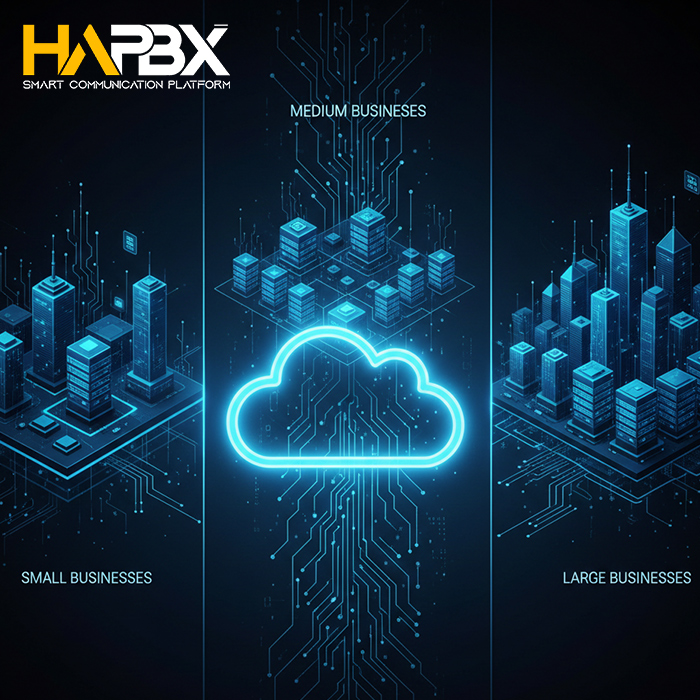
When comparing options, you should focus on these key factors:
- Integrations: Ensure the system connects seamlessly with your essential tools – CRM platforms, productivity apps, and features like click-to-dial, screen pops, and automatic call logging. Smooth integrations help teams work faster without switching between apps.
- Pricing: Request quotes from multiple providers, especially if you have a large or growing team. Most services use per-user pricing, with discounts for annual plans. Choose a model that aligns with your budget and projected growth.
- Flexibility: Different teams require different capabilities. Sales and support may need advanced routing, call queues, or analytics, while others only need basic calling. Look for providers that offer flexible plans so you can match features to each department without unnecessary costs.
- Support: If your team is new to cloud systems, dependable support is crucial. Some providers offer 24/7 assistance across all plans, while others limit it to premium tiers. Make sure the provider’s availability matches your working hours.
- Hardware Options: Cloud PBX works on computers and mobile devices, but some teams prefer physical desk phones. Many providers sell or lease IP phones from brands like Poly or Yealink, making it easy to equip your team with traditional hardware if needed.
FAQs
Is cloud PBX secure?
Yes. Security depends on the provider, but most modern cloud PBX platforms offer strong protection such as encryption, multi-factor authentication, and fraud prevention tools.
Does cloud PBX provide good call quality?
With a stable and reliable internet connection, cloud PBX can deliver high-definition voice and video quality equal to – or better than – traditional phone systems.
Can cloud PBX systems support video calls?
Absolutely. Many cloud PBX solutions include built-in video calling and full video meeting capabilities for remote and hybrid teams.
Which cloud PBX provider is best for small businesses?
The best provider is the one that meets your current needs and scales with your growth. Look for reliability, easy setup, good support, and the features your team will actually use.
HaPBX offers cloud PBX phone system designed to support a wide range of business types with scalable plans, strong integrations, and simple onboarding, making them an excellent fit for both small teams and fast-growing companies.
Is cloud PBX the same as UCaaS?
No. Cloud PBX focuses on business calling features, while UCaaS includes a broader suite of tools like messaging, video conferencing, SMS, and collaboration apps. Cloud PBX is often one part of a UCaaS platform.
Does cloud PBX work for global remote teams?
Yes. Many providers offer international calling packages or unlimited calling to selected countries. This makes cloud PBX a strong choice for distributed workforces.
HaPBX – A Cloud PBX Platform Engineered for Business Growth and Stability
HaPBX is designed for organizations that prioritize system reliability, predictable performance, and long-term scalability. Instead of self-hosted or single-instance VoIP deployments, HaPBX runs on a Dedicated Instance architecture built on a Global Cluster Infrastructure, eliminating common single-point-of-failure risks.
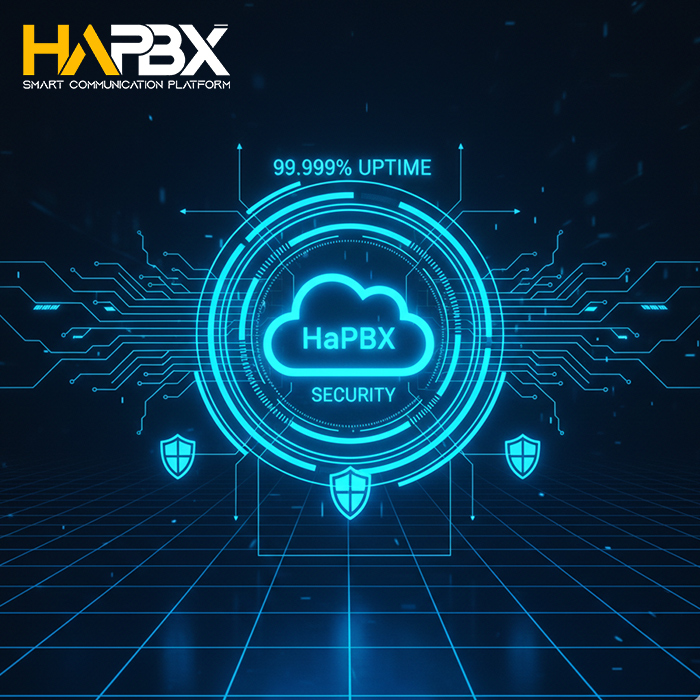
The platform delivers true High Availability (HA) through cluster-level redundancy, ensuring near-zero downtime even when individual nodes fail. Performance is maintained with consistent low latency (~50ms, never exceeding 150ms), supporting stable voice quality under real-world workloads.
Security is enforced at the infrastructure level with traffic and data separation across clusters, reducing exposure compared to shared or self-managed PBX environments and supporting enterprise security requirements by design.
From a cost perspective, HaPBX removes traditional scaling penalties. The platform offers unlimited extensions with no per-user or per-extension fees, while supporting 100–200 concurrent calls under current configurations – delivering enterprise-grade performance without enterprise-level cost complexity.
With a US-based primary cluster and a roadmap for regional expansion, HaPBX provides a cost-efficient, stable, and scalable Cloud PBX foundation for businesses at every growth stage.
HAPBX – The Premier High Available Private Branch Exchange (Cloud PBX) for Enterprise Communication
Conclusion
Cloud PBX offers businesses a smarter, more flexible way to communicate – free from the limitations of legacy phone hardware. As companies grow, embrace hybrid work, or expand across multiple locations, a cloud-based system ensures reliable connectivity, enterprise-grade features, and the ability to scale without complexity.
This is where HaPBX stands out. With a strong infrastructure roadmap and performance designed for real-world demands, HaPBX gives businesses a future-ready communication platform – reliable, scalable, and built to support growth without added complexity. If you’re ready to upgrade to a modern cloud PBX that truly performs, HaPBX is engineered to take your communications to the next level.